


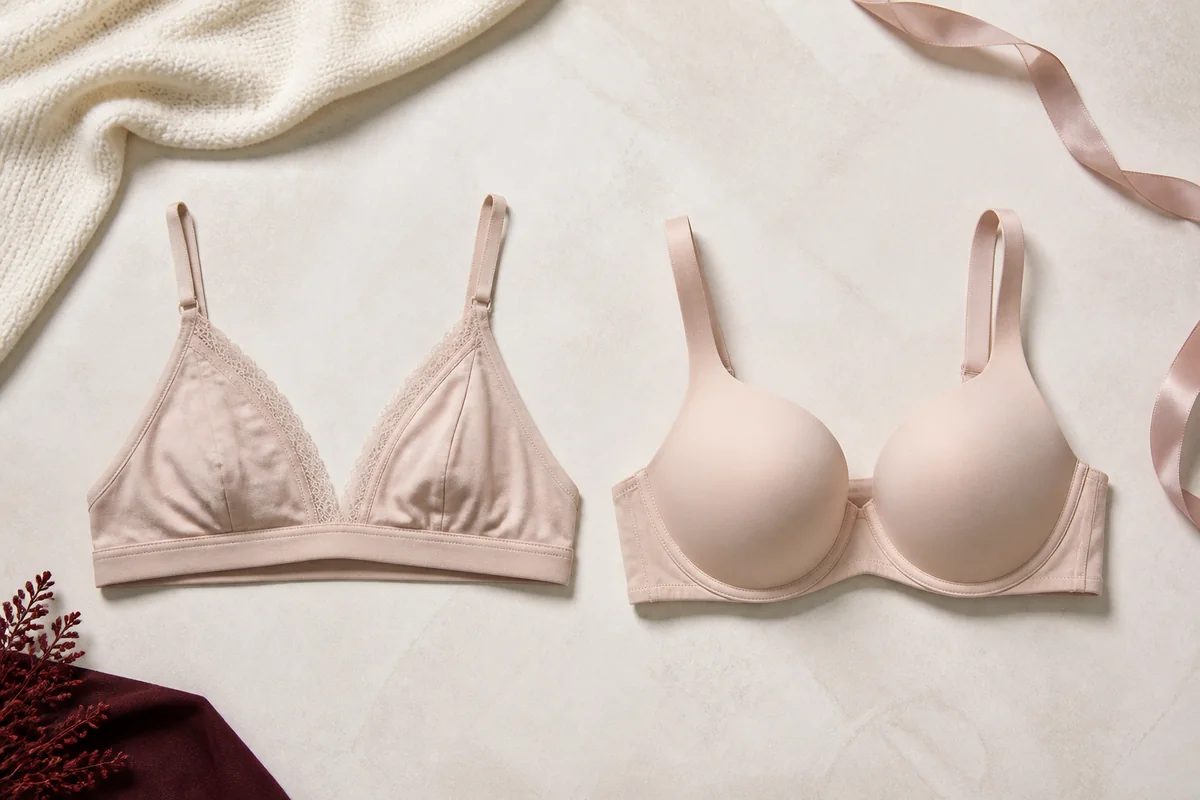
If you’ve ever stood in front of your lingerie drawer on a warm morning, holding a soft bralette in one hand and a structured underwire bra in the other, wondering which option will actually work for your day, you’re not alone. The bralette vs bra conversation is not about picking one “better” option—it’s about understanding how each style is built, what kind of coverage and support you can expect, and which outfits each pairs best with, so you can make choices that feel good for your body and your planned activities. Remember that fit always varies by brand and individual style, so there is no universal rule that applies to every piece on the market; use this guide as a starting point to explore what works for you, not a rigid set of rules.
How Structure Differs Between Bralettes and Regular Bras
The most noticeable difference between the two styles starts with construction, which shapes every other part of how they feel and function. Most traditional bras are built with a set of structured components designed to shape and hold breast tissue in a specific silhouette: these often include underwire channels, molded or seamed cups, adjustable straps with fixed slider hardware, a wide hook-and-eye back closure, and sometimes side boning to keep the band in place. The structure is intentional, built to create a consistent shape across hours of wear.
Bralettes, by contrast, are typically constructed with minimal, flexible parts. Many styles have no underwire at all, no molded cups, and may pull on over the head instead of using a hook-and-eye closure, though some bralettes do include adjustable straps or light boning for extra stability. Fabrics for bralettes often lean into soft, stretchy knits, lace, or lightweight cotton that moves with your body, rather than holding a fixed shape even when you are not wearing it. This flexible build does not mean bralettes are flimsy—they are simply designed for a different kind of wear, prioritizing freedom of movement over rigid shaping.
It is critical to note that there is significant overlap between the two categories today. Some brands sell structured bralettes with light underwire and seamed cups, and some regular bras are made with soft, wireless construction that feels nearly as flexible as a bralette. Before purchasing any style, it is always helpful to check the product description for specific construction details, and cross-reference your measurements with our size guide as a starting point, since sizing can shift dramatically between brands and even between different styles from the same label.
Coverage Expectations for Bralettes vs Bras
Coverage refers to how much of your breast and upper torso the lingerie covers, and this can vary widely within both categories—but there are common patterns you can expect when shopping.
| Style | Typical Coverage Range | Common Design Notes |
|---|---|---|
| Regular bra | Low-cut deep V styles to full-coverage designs that cover most breast tissue | Cup coverage is usually consistent across sizes; many styles have taller side panels to reduce spillage under the arms |
| Bralette | Partial-coverage triangle cuts to extended band designs that extend below the bust to the ribcage | Coverage often shifts slightly when you move, due to stretchy fabric; many styles have lower necklines or wider arm openings |
If you prefer a style that stays in place without shifting when you reach for something on a high shelf, bend down to tie your shoes, or walk around a busy market for hours, a traditional bra with more fixed cup coverage may feel more reliable for those activities. If you do not mind light, gentle shifting as you move, and prefer a less restrictive feel, a bralette’s softer coverage may feel more comfortable for low-key days. You may find that some bralettes offer just as much coverage as a full-coverage bra, depending on the cut—for example, extended band bralettes often extend several inches below the bust, offering more torso coverage than many standard underwire bras.
There is no right or wrong amount of coverage to prefer. Some days you may want the enclosed feel of a full-coverage bra, and other days you may want the light, barely-there feel of a triangle-cut bralette. You can browse both styles across our full bra collection to compare cuts side by side.
Realistic Support Expectations for Each Style
A common misconception in the bralette vs bra conversation is that one style offers “good” support and the other offers none. The truth is that support needs are deeply personal: what feels supportive enough for you will depend on your comfort preferences, the activities you have planned, and how you like your lingerie to feel against your skin.
Traditional structured bras are generally designed to offer targeted lift and separation, with weight distributed across the band, bra straps, and cups. If you prefer a style that lifts breast tissue away from the ribcage, reduces bounce during more active movement (like rushing to catch public transit, carrying heavy grocery bags, or spending a day walking around a local site), a structured bra will usually meet that need more consistently. This does not mean you need a structured bra for every activity, of course—many people find that soft wireless options feel perfectly supportive for low-movement days working from home, grabbing coffee with friends, or running quick errands.
Bralettes offer support primarily through the fit of the underbust band, rather than through underwire or molded cups. A well-fitting bralette with a snug, non-digging band can feel supportive enough for all-day wear for many people, but it will not usually offer the same level of lift or bounce reduction as a structured underwire bra. It is also important to remember that bralette support varies widely: a bralette made with thick, sturdy fabric and a wide underbust band will offer far more support than a thin, delicate lace bralette with no elastic at the band. If you are trying a bralette for the first time and are worried about support, look for styles with adjustable straps and a wide, lined band for extra stability, rather than assuming all bralettes will feel too loose.
Fit is the biggest factor in how supportive either style will feel. A bra that is too loose in the band will ride up your back and offer no support, no matter how much structure it has, and a bralette that is too tight will dig into your ribs and feel uncomfortable within an hour. When trying on either style, take a few minutes to move around, lift your arms, and sit down to make sure the fit feels consistent and comfortable before you decide if it works for your planned activities.
Everyday Outfit Compatibility for Warm Weather Lifestyles
For many people in warm, humid climates, the biggest deciding factor between a bralette and a bra comes down to what they are wearing that day, especially with the mix of casual, work, and social plans. Here is a quick breakdown of which style tends to pair best with common everyday outfits:
Outfits that usually work better with a traditional bra
- Fitted button-downs or structured work blouses: Smooth, molded-cup bras create a seamless, even line under tailored fabric, so seams or cup edges do not show through thinner workwear materials. If your office has a more formal dress code, a structured seamless everyday contour bra designed for wear under t-shirts will often be the most reliable choice under crisp shirts.
- High-neck or formal tops for events: If you are attending a wedding, dinner, or work event and wearing a structured fabric that holds its shape, a bra with targeted support will help the garment sit as intended, without slouching or shifting as you move.
- Thin-strap tank tops where you do not want straps to show: Many traditional bras come with convertible or clear strap options, making them easier to adjust for tricky necklines where you want to keep lingerie completely hidden.
Outfits that usually work better with a bralette
- Oversized t-shirts, linen shirts, or loose loungewear: On hot days when you are wearing flowy, casual fabrics, a soft bralette will not add extra bulk or tight layers under loose clothing, making it a cooler, more comfortable option for running errands or relaxing at home.
- Low-back or scoop-neck casual tops: Many bralettes have decorative lace or strappy backs that are designed to peek out of open tops, so you do not have to worry about hiding your lingerie straps. This works especially well for weekend trips to the mall, beach days, or casual dinners with friends.
- Loungewear and sleep sets: Soft bralettes pair perfectly with lightweight sleepwear for days when you want light coverage without the feel of a structured bra, even when you are resting at home.
Of course, there are no hard rules here. If you love the feel of a bralette under a structured blazer, or prefer the support of a soft bra under an oversized t-shirt, that choice is completely valid. Many people mix and match both styles in their weekly rotation, picking the option that matches their mood and outfit that day rather than sticking exclusively to one type of lingerie. It is also worth noting that both bralettes and regular bras require similar care to last longer: hand washing in cool water and laying flat to dry will help keep elastic stretchy and fabrics intact, as outlined in our lingerie care guide.
At the end of the day, the bralette vs bra choice does not have to be an either/or decision. You do not have to commit to one style for every occasion. Start by checking what you already have in your drawer that feels most comfortable for your typical week, note which outfits you struggle to pair with your current lingerie, and pick one new style to test if it fills that gap. The best lingerie choices are the ones that make you feel comfortable and confident, no matter what your day holds.
Frequently asked questions
Can I wear a bralette every day instead of a regular bra?
Yes, if you find a well-fitting bralette that offers the level of support and coverage you prefer for your daily activities. Many people wear bralettes full-time, while others switch between styles depending on their outfit and planned activities for the day.
Do bralettes work for people with larger bust sizes?
Bralettes are made in a wide range of sizes, and many styles with wide, snug underbust bands offer enough support for people with larger busts for everyday wear. Fit varies by brand, so always check individual size charts and product details before purchasing.
Will a regular bra be too hot to wear during warm weather?
That depends on the fabric and fit. Many lightweight, unlined regular bras made from breathable cotton or mesh feel comfortable in warm weather, while thick, heavily padded bras may feel warmer. You can choose lighter fabric options for both bralettes and bras to stay cool.
Can I wear a bralette as a top on its own?
Many people style extended band or decorative lace bralettes as outerwear, paired with high-waisted bottoms, open shirts, or cardigans for casual outings. It ultimately depends on your personal comfort and the dress code of where you are going.
 T-Shirt Bra vs Seamless Bra: Cup Construction, Edges and Use Under Fitted Clothing
 How to Choose Bras for a Fuller Bust That Fit Your Unique Shape
 A Practical Guide to Types of Bras for Everyday Outfits & Needs