


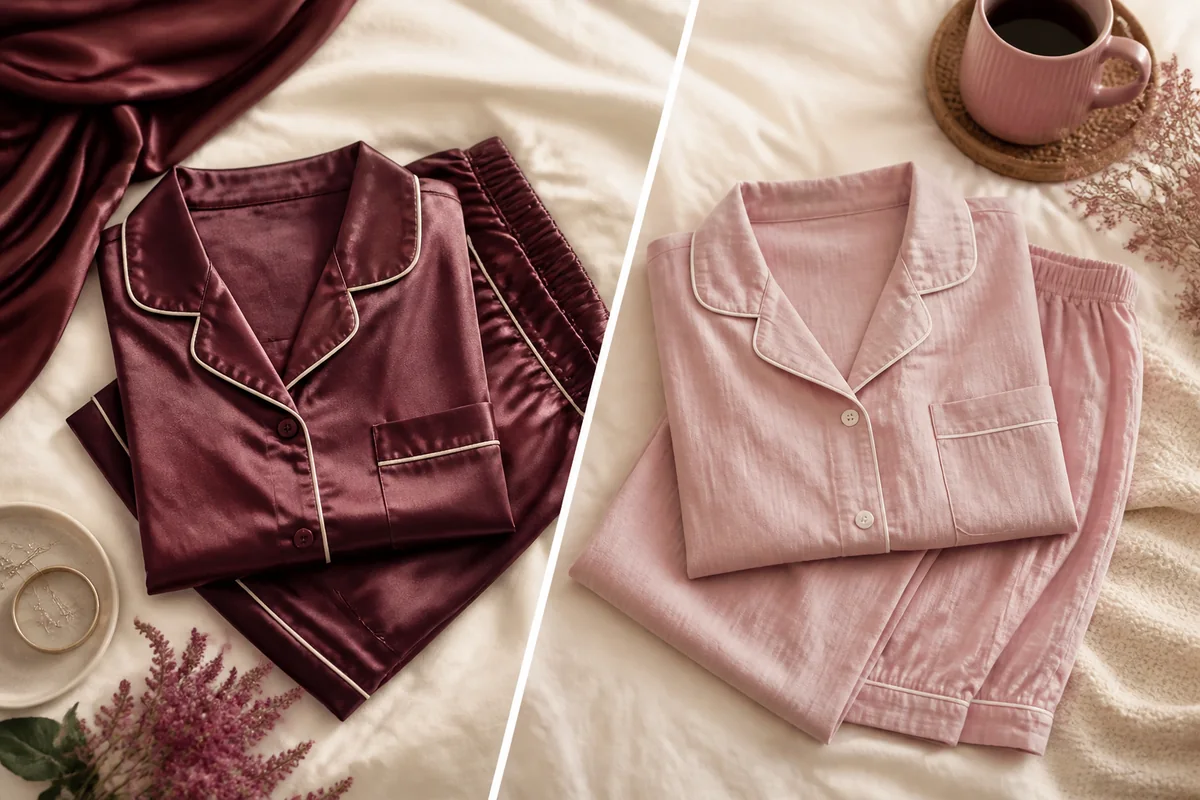
When you’re winding down after a long day in Thailand, the last thing you want is sleepwear that sticks, scratches, or leaves you tossing and turning halfway through the night. If you’ve ever stood in front of your wardrobe (or scrolled our sleepwear collection) trying to choose between satin vs cotton sleepwear, you’re not alone. Both fabrics are beloved for very different reasons, and the right choice for you depends less on “which is better” and more on how you sleep, what feels good against your skin, and how much time you want to spend on laundry day.
It’s important to note first that fit varies widely by brand and style, regardless of fabric. A loose-fitting cotton nightshirt will feel very different from a tailored satin slip, even if they share the same size label. Always use our size guide as a starting point, and prioritize what feels comfortable for your body, not arbitrary size labels.
How Satin and Cotton Feel Against Skin
The first thing most people notice about sleepwear is how it feels the second it touches your skin. This is where satin and cotton have distinctly different personalities, and neither is universally “better” — it all comes down to personal preference.
Satin, woven to have a smooth, glossy surface on one side, glides over skin instead of catching on dry patches, body hair, or loose bedding. It feels cool to the touch when you first slip it on, which can feel like a small luxury on warm evenings when you’re waiting for your room to cool down. That glide also means it creates less friction against your skin as you shift positions overnight, which many people find especially gentle. It’s worth noting that satin can be made from silk, polyester, or a blend; most affordable everyday satin sleepwear is polyester-based, which keeps that signature smooth feel at a more accessible price point.
Cotton, by contrast, has a soft, matte, slightly textured feel that gets softer with every wash. For people who prefer the familiar, cozy feel of well-worn fabric, cotton often feels like a hug rather than a sleek slip. It doesn’t glide the way satin does, but for many sleepers, that soft, broken-in texture is exactly what makes it feel relaxing. Unbleached, lightweight cotton can feel almost airy against skin, while thicker cotton weaves like flannel (rarely used in Thailand’s year-round warm climate) feel substantial and warm.
Quick Feel Comparison Checklist
- Choose satin if you love: Smooth, gliding fabric, a cool first touch, minimal friction against skin when you toss and turn
- Choose cotton if you love: Soft, matte texture, that “worn-in” cozy feel, fabric that feels familiar and low-fuss from the first wear
Breathability and Performance in Thailand’s Climate
For anyone sleeping in Thailand’s warm, often humid weather, breathability isn’t a nice-to-have — it’s the difference between waking up rested and waking up sticky and overheated. This is where fabric weave and weight matter just as much as the material itself.
Cotton is a natural fiber, which means it absorbs moisture easily. If you sweat lightly overnight, lightweight cotton will wick that moisture away from your skin and help it evaporate, as long as the fabric isn’t tightly woven or overly thick. That said, if you sweat heavily, cotton can hold onto that moisture and feel damp against your skin after a few hours, especially if your room has poor airflow. Loose-fitting, lightweight cotton styles (like cropped pants and loose camisole sets) perform best in humid weather, as they allow extra air circulation between the fabric and your skin.
Satin, particularly polyester satin, is less absorbent than cotton. Instead of soaking up sweat, it allows moisture to sit on the surface of the fabric, which can feel cool at first but may feel clammy if you run hot or sweat heavily overnight, especially in styles that fit close to the body. That said, loose-fitting satin styles (like oversized satin shirts or wide-leg satin pants) offer plenty of airflow, and many sleepers find that the smooth surface doesn’t stick to damp skin the way soaked cotton can. If you keep your bedroom cool with air conditioning, satin rarely feels clammy, and its cool-to-the-touch feel can feel particularly pleasant when you first get into bed.
It’s a common misconception that one fabric is universally more breathable than the other: a thin, loose satin camisole will often feel cooler than a thick, tight-fitting cotton t-shirt repurposed as sleepwear. Always check the fabric weight and fit of a style, not just the fiber content.
| Factor | Satin Sleepwear | Cotton Sleepwear |
|---|---|---|
| Moisture handling | Low absorption; moisture sits on fabric surface | High absorption; pulls moisture away from skin but can hold dampness |
| Best for room conditions | Air-conditioned rooms, cool evenings, low to moderate sweat | Naturally ventilated rooms, warm humid nights, light to moderate sweat |
| Airflow note | Loose weaves and loose fits dramatically improve breathability | Lightweight, loose weaves prevent damp, heavy fabric feel |
Care and Longevity for Everyday Use
If you don’t want to spend extra time on special laundry routines, care requirements are a key part of choosing between satin vs cotton sleepwear. Neither fabric is “high maintenance,” but they do have different needs to stay looking and feeling good wash after wash.
Cotton is famously low-fuss for everyday wear. Most cotton sleepwear can be tossed in the washing machine on a cold or warm cycle, tumble dried on low, and ironed if it gets wrinkled. It will shrink slightly after the first wash (which is why checking size guides before ordering is always a good idea), and over time, it may fade slightly or develop that soft, well-loved patina many people prefer. You don’t need special detergent or gentle cycles for most cotton sets, though washing with similar colors will prevent dye transfer. For more detailed fabric care tips for all your intimates, you can reference our full lingerie care guide.
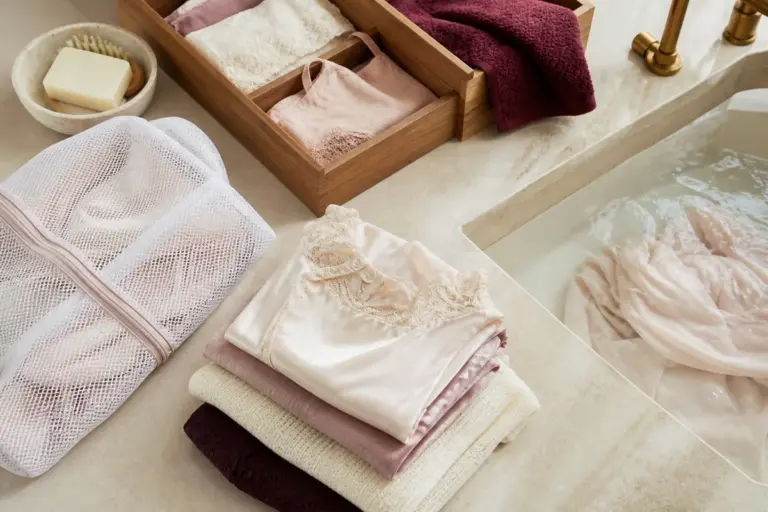
Satin requires a little more gentle handling to keep its smooth surface and avoid snags. Most polyester satin sleepwear can be washed on a cold delicate cycle in a mesh laundry bag, but it should be hung to dry instead of tumble dried, as high heat can damage the weave and cause wrinkling or shrinkage. Avoid washing satin with rough fabrics like denim or towels, which can pull at the fabric and create snags. You don’t need to dry clean most everyday satin sleepwear, but it’s a good idea to fasten any buttons or zippers before washing to prevent pulls. With proper care, satin will hold its glossy finish for years, though sharp jewelry or rough nail edges can cause snags if you’re not careful.
Simple Care Routine Cheat Sheet
- For cotton: Wash in cool to warm water with like colors, tumble dry low, iron on cotton setting if desired
- For satin: Turn inside out, wash in a mesh bag on cold delicate cycle, hang to dry away from direct sunlight
- For both fabrics: Avoid fabric softener, which can build up on fibers and reduce softness over time
Matching Fabric to Your Sleeping Preferences
At the end of the day, the best sleepwear is the kind you don’t have to think about once you climb into bed. To make the choice easier, think about your regular sleep habits, not just what looks pretty online.
If you tend to run cold at night, or you keep your air conditioning low enough that you need a light layer that doesn’t bunch up, satin is a great pick. Its smooth surface doesn’t twist around your body the way textured cotton can if you shift positions often, and it pairs beautifully with lightweight blankets when you need extra warmth. Satin also makes a lovely option for slow mornings, lounging with coffee, or getting ready for a night in, when you want something that feels a little special without being restrictive.
If you run hot, prefer to sleep in naturally ventilated rooms, or you prioritize low-fuss pieces you can throw on after a shower without thinking twice, cotton is likely your best match. It’s soft, familiar, and works just as well for impromptu naps on the couch as it does for a full night’s sleep. Cotton also comes in a wider range of relaxed, oversized fits for people who hate any feeling of constriction while they rest.
There’s no rule that says you have to choose one fabric forever. Many people keep both options in their wardrobe: cotton sets for extra humid, sticky nights, and satin sets for cooler evenings or when they want to treat themselves to a little luxury. You can even mix and match if that feels best for you — there’s no “right” way to dress for sleep, as long as you feel comfortable.
Remember that fabric is only one part of the equation: a poorly fitting garment in any material will feel uncomfortable, regardless of how soft or smooth it is. Take the time to notice what you love about your current favorite sleep set — do you prefer loose, flowy fits, or styles that sit close to your skin? Do you hate tags, or do you not notice them? Those small preferences will guide you just as much as fiber content when you browse new styles.
When you’re ready to explore options, you can filter styles by fabric and fit in our sleepwear shop to find pieces that align with what you already know you love, or order one style in each fabric to test what works best for your unique sleep routine.
Frequently asked questions
Can satin sleepwear cause skin irritation for sensitive skin?
Any fabric can cause irritation if you have specific sensitivities to dyes, finishes, or detergents, but smooth, high-quality satin is not inherently irritating. If you have very sensitive skin, wash new sleepwear before wearing it to remove any residual manufacturing finishes, and opt for loose-fitting styles that don’t rub against your skin.
Does cotton sleepwear wrinkle more than satin?
Cotton does wrinkle more easily than satin, especially if left in the dryer after a cycle ends, but many people find the slightly rumpled, lived-in look of cotton sleepwear part of its cozy appeal. If you prefer a crisp look, you can iron cotton on a medium heat setting, while satin only needs a quick cool iron if it develops creases after washing.
Is one fabric better for people who toss and turn a lot at night?
Satin’s smooth glide means it creates less friction against skin and sheets as you shift positions, so it is less likely to twist or bunch around your body overnight. That said, loose-fitting cotton styles with a soft finish will also move with you without causing discomfort, so it comes down to personal texture preference.
How do I know if a satin or cotton sleepwear style will be cool enough for Thai weather?
Check the product description for fabric weight, and prioritize loose, flowy fits over tight, body-hugging styles in either fabric. Lightweight satin and thin, breathable cotton both work well in warm weather; thicker, heavy weaves of either material will feel too warm for most nights in Thailand.
 How to Wash and Store Bras: A Shape-Protecting Routine for Hand and Machine Washing