


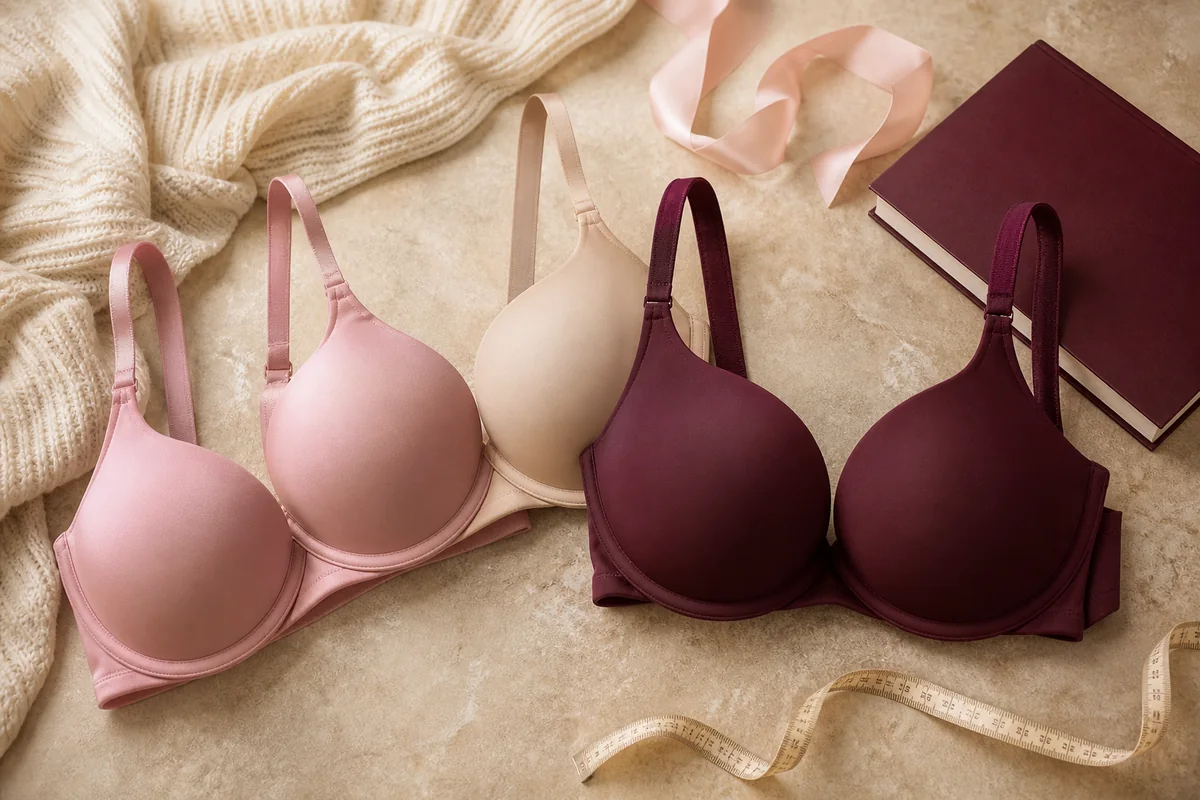
If you’ve ever picked up your usual bra size only to find the band digs in, the cups gap, or the style you love is completely sold out, you may have heard of bra sister sizes as a simple workaround. For many people shopping for lingerie in Thailand, where different brands carry different size runs and stock can shift quickly across local and international labels, understanding how sister sizing works takes a lot of the guesswork out of finding a comfortable, well-fitting bra. It is not a magic fix for every fit issue, but it is a useful starting point to expand your options when your go-to size doesn’t feel quite right or isn’t available.
Before we break down how the system works, it is important to note that every size chart is a starting point, not a universal rule. There is no global standard for bra sizing, even across brands that list sizes in the same US, UK, EU, or Asian measurement systems. Sister sizing is simply a tool to help you identify adjacent sizes that share a similar cup volume, adjusted for a tighter or looser band, to give you more flexibility as you shop. You can always cross-reference any size you try with our public size guide as a baseline before you order.
How Bra Sister Sizes Actually Work
Bra sizing is built on two core measurements: the band size (the number, which corresponds to the measurement around your ribcage just under your bust) and the cup size (the letter, which corresponds to the difference between your overbust measurement and your band size). Sister sizes work on a simple ratio: as you go up a band size, you go down a cup size to keep the total volume of the cup roughly the same, and vice versa. This is because cup size is not a fixed volume on its own—a 34C cup, for example, holds the same approximate volume as the cup on a 32D or 36B, even though the band length is different.
You don’t need to do complex math to find your sister sizes. Use this simple, quick reference table to find adjacent sizes that may work for you, starting with your best-fitting current bra size as a baseline:
| Looser Band Option (up 1 band, down 1 cup) | Your Core Size | Tighter Band Option (down 1 band, up 1 cup) |
|---|---|---|
| 36B | 34C | 32D |
| 38C | 36D | 34DD |
| 34A | 32B | 30C |
| 40D | 38DD | 36E |
| 32A | 30B | 28C |
To find sister sizes outside this table, follow two simple rules for every size adjustment:
- If you want a looser band (for example, if your usual band feels too tight when fastened on the loosest hook), move up one full band size and down one cup letter. For example, if you normally wear a 34C, a looser sister size would be 36B.
- If you want a tighter band (for example, if your usual band rides up your back even when fastened on the tightest hook), move down one full band size and up one cup letter. For example, if you normally wear a 34C, a tighter sister size would be 32D.
It is normal if this feels counterintuitive at first. Many people assume a D cup is always “bigger” than a C cup, but cup size is relative to band length. A 32D is designed for someone with a smaller ribcage than a person who wears a 36C, but the actual space in the cup is nearly identical.
When Bra Sister Sizes Can Help You Find a Better Fit
Sister sizing is not a replacement for measuring yourself or trying on bras when possible, but it is an incredibly useful tool in three common scenarios many shoppers face:
1. When your usual size is out of stock
It is frustrating to find a bra style you love, only to discover your exact size is sold out, especially when shopping for limited-run collections or popular everyday styles. Instead of writing the style off entirely, check if either of your closest sister sizes is available. This is a great way to access designs you might otherwise miss, whether you are browsing everyday t-shirt bras, strapless styles, or special occasion pieces. Always give the sister size a quick try-on check before wearing it out, to make sure the band and cups sit comfortably.
2. When the band of your usual size doesn’t fit quite right
Even if you measure carefully, different brands cut their bands with different amounts of stretch. You may find that one brand’s 34 band feels snug enough to stay in place all day, while another brand’s 34 band feels loose even on the tightest hook, or so tight it leaves uncomfortable indentations after an hour of wear. Instead of assuming the style is not for you, try your nearest sister size to adjust the band length while keeping the cup volume consistent. For example, if a 34C band feels too tight, try a 36B in the same style; if the 34C band rides up, try a 32D.
3. When your body feels different day to day
It is completely normal for your ribcage and bust measurements to shift slightly over time, or even at different points in your monthly cycle, due to bloating, activity level, or other natural changes. If your usual bra feels a little too snug or a little too loose on a given day, having a couple of sister sizes in your lingerie drawer means you don’t have to choose between discomfort and going without the support you prefer. This is also helpful if you are between sizes as your body changes, so you don’t have to replace your entire bra collection all at once.
Why Cup Volume Still Varies By Style and Brand
It is critical to remember that bra sister sizes represent a rough equivalent of cup volume, not an exact match, and that no two bras will fit exactly the same way—even if they are listed as the same size. There is no mandatory global sizing standard for lingerie, so brands may cut their patterns based on their own fit models, design goals, and fabric choices. There is no universal rule that brands from a specific region run smaller or larger, so it is always best to check individual size notes for each product rather than making assumptions based on where a brand is based.
A few common factors change how a size (and its sister size) will fit, even within the same brand:
- Fabric stretch: A bra made with firm, low-stretch lace or molded foam will fit very differently than a soft, high-stretch jersey or mesh bra, even if both are labeled the exact same size. Molded cups, for example, hold a fixed shape, so a sister size in a molded cup may not conform as closely to your shape as it would in a soft, unlined style.
- Cup shape and design: A plunge bra is cut to sit lower on the chest, a full-coverage bra is cut to cover more breast tissue, and a balconette bra is cut to lift from the bottom and sit wider across the chest. All three styles may use the same nominal cup volume, but the shape of the cup will change how it fits your body. You may find that your usual sister size works perfectly in a soft bralette but gaps or pinches in a rigid strapless bra, for example.
- Band construction: Some bands are made with wide, structured elastic and side boning for extra support, while others are thin and soft with minimal structure. A firm support band will fit tighter than a soft leisure bra band of the same listed measurement, so your sister size adjustment may need to shift depending on band design.
- Underwire shape: Underwires come in different widths and curves, even within the same size. A narrow, deep underwire may sit perfectly against your ribcage in one size, while a wide, shallow underwire in the same sister size may dig in or sit away from your body.
This is why it is always a good idea to try on a new style (or its sister size) for a few minutes when you first receive it, before removing tags. Fasten the band on the loosest hook when you first try it on—this leaves room to tighten the band as the elastic stretches over time, as outlined in our lingerie care guide. When you try it on, check that the band sits level all the way around your body (no riding up in the back), the cups lie smoothly against your skin without gaping or digging in, and the straps stay in place comfortably without leaving indentations on your shoulders. If none of these elements feel right, that is not a failure on your part—it just means that specific size or style is not the best match for you in that particular cut.
If you are building a versatile lingerie collection, remember that you do not have to stick to one single size across every style. Many people find they wear one size in unlined bralettes, a sister size in structured sports bras, and another size entirely in low-cut plunge styles, and that is completely normal. The goal of sizing, including sister sizing, is to help you find pieces that feel comfortable for your body, not to force you to fit a single number or letter on a label. As you explore options, you can browse a wide range of cuts and designs in our lingerie sets collection to find what feels best for you, using sister sizes as a flexible tool rather than a strict rule.
A great next step to make sizing easier is to pull out your best-fitting, most comfortable bra right now, note its size, and write down its two closest sister sizes to save for your next shopping trip. That way, when you fall in love with a new style, you will already have two alternate sizes to consider if your core size is out of stock or doesn’t fit perfectly on the first try.
Frequently asked questions
Can I use sister sizing for every type of bra, including sports bras and bralettes?
Sister sizing works as a starting point for all bra types, but you may notice bigger fit differences in structured styles like molded cup sports bras or strapless bras, which have less stretch than soft bralettes or unlined styles. Always check individual product fit notes first.
How do I know which sister size to pick if my band is too loose?
If your band rides up your back even on the tightest hook, opt for the sister size one band size down and one cup size up—for example, move from 36C to 34D—for a snugger, more secure band fit.
Will my sister size give me the same level of support as my usual size?
Support levels can shift slightly with sister sizes, because the band does most of the work of holding a bra in place. A tighter band may feel more supportive, while a looser band may feel softer, even when cup volume is similar.
Do I need to measure myself again to find my sister sizes?
You don’t need a new measurement to find your core sister sizes if you already have a bra that fits you well in your current closet, but measuring every 6 to 12 months can help you adjust for any natural changes in your body over time.
 Signs Your Bra Does Not Fit: Easy Fixes for Riding Bands, Gaping Cups, Spillage & Slipping Straps
 Bra Size Conversion Chart: Your No-Stress Guide to US, UK, EU & Asian Size Labels
 How to Measure Bra Size: A Simple Step-by-Step Home Guide