


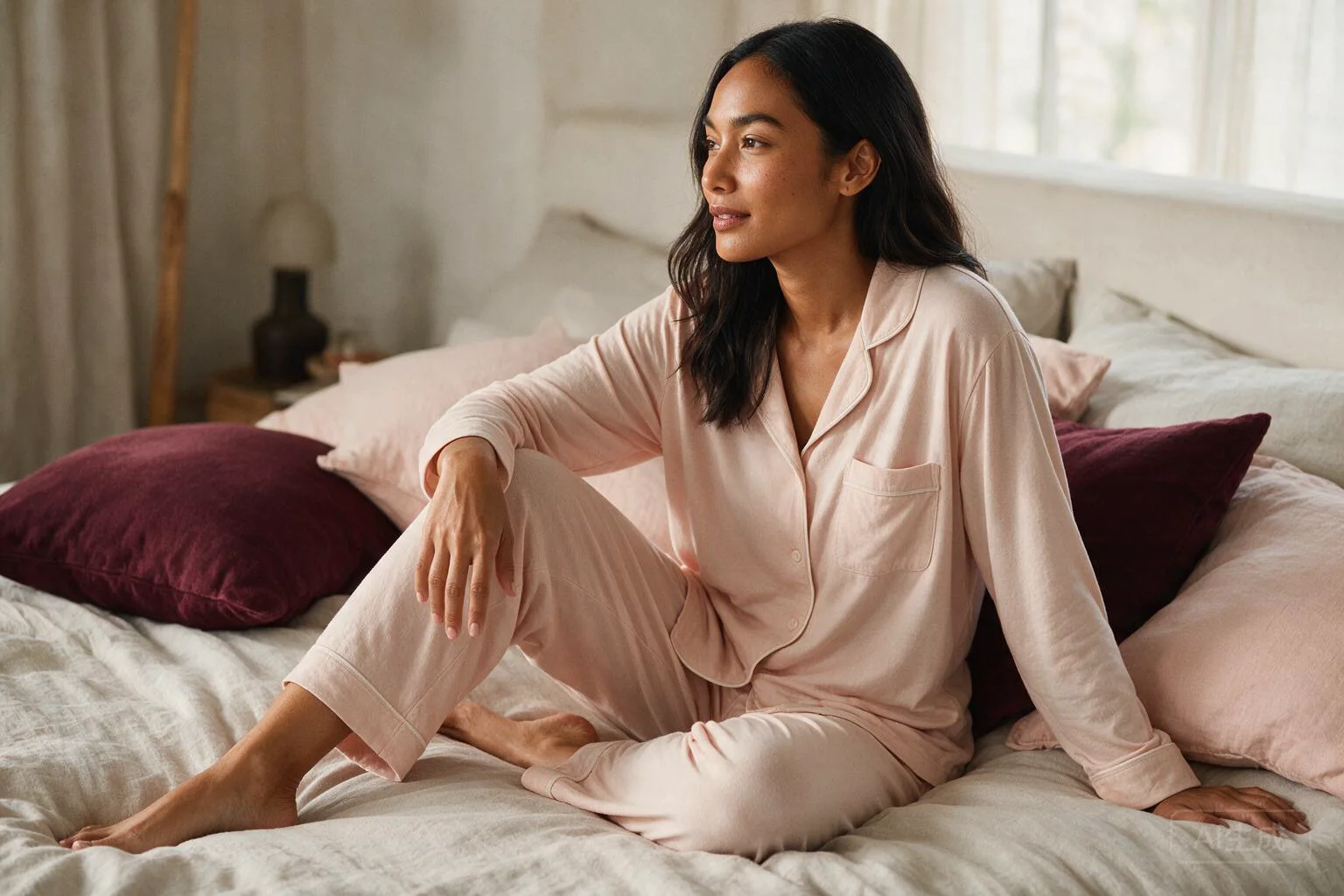
If you’ve ever stood in front of your sleepwear drawer 10 minutes before bed, toggling between a soft two-piece pajama set and a flowy nightgown wondering which will actually let you rest easy through a warm Thai evening, you’re not alone. The pajamas vs nightgown conversation isn’t about crowning one style as the objectively better choice—it’s about matching what you wear to bed to how you move, how much coverage you prefer, the temperature of your space, and the small, personal rituals that make up your nightly wind-down. We’re skipping the generic “one style fits all” rules here, because comfort at bedtime is deeply personal, and fit always varies by brand and individual cut, no matter what size is listed on the tag.
How movement freedom compares between the two styles
The first big difference most people notice is how each style moves with (or around) you as you shift through the night, or go through pre-bed tasks. Pajama sets, which pair a separate top with pants or shorts, stay anchored to your body as you move. If you’re the type who tosses and turns frequently, gets up multiple times a night to get a glass of water, chase a pet off the bed, or check on a family member, the separate pieces won’t twist or ride up in ways that require constant adjustment. For people who do gentle pre-bed stretches, fold laundry right before sleeping, or curl up on the floor to play with kids before tucking in, the fixed waistband and separate leg coverage means you won’t have to tug fabric down to stay covered when you bend or reach.
Nightgowns, by contrast, are one-piece, loose-fitting (for most styles) garments that hang from the shoulders, with no separate bottom piece. They offer unrestricted movement around the hips and legs, with no waistband to dig in or constrict your midsection if you prefer zero tight fabric around your stomach after dinner. The tradeoff is that extra flowy fabric can twist around your legs if you toss and turn heavily, or ride up if you move quickly, so you may need to smooth it out when you get out of bed. That said, many people find that lack of constriction ideal for slow, calm nights where you’re reading in bed, sipping herbal tea, or doing slow breathing exercises before sleep, with no quick movements required.
Quick movement preference checklist to narrow your pick:
- Choose pajamas if you: toss and turn frequently, get up often throughout the night, do active pre-bed tasks, dislike adjusting twisted fabric while you sleep
- Choose a nightgown if you: prefer zero constriction around your waist, have a calm, low-movement wind-down routine, hate the feel of waistbands against your skin when you lie down
Remember that cut matters just as much as style: a slim-cut nightgown will stay in place far better than an oversized, extra-flowy one, just as a loose, drawstring pajama set will feel far less restrictive than a tight, elastic-waist pair with no stretch. Always check individual product size guides, as sizing varies between brands and styles, with no universal fit across sleepwear lines.
Coverage differences to match your personal preference
Coverage is one of the most personal factors when choosing sleepwear, and there is no “right” amount of coverage—only what makes you feel comfortable and at ease in your space. Pajama sets offer modular coverage, meaning you can pick exactly how much fabric you want on each part of your body. You can opt for long-sleeve tops paired with shorts for cool air-conditioned rooms, short-sleeve tops with full-length pants for nights you want leg coverage without extra arm fabric, or cropped sets that hit at the calf for a middle ground. Because the top and bottom are separate, you can also adjust coverage on the fly: push sleeves up if you get warm, or pull a long pant leg down if a cool breeze comes through the window. This modularity also makes pajamas a popular pick if you share a living space with family, roommates, or frequent overnight guests, as you can answer the door or grab a snack from the kitchen without needing to throw on an extra layer.
Nightgowns offer continuous coverage from shoulder to hem, with hem lengths ranging from short, above-the-knee cuts to full-length styles that brush the ankle. There are no gaps between a top and bottom to worry about, so you won’t have cold air hitting your lower back if you roll over. Most nightgowns have a looser fit across the chest and torso, with no tight bands or seams across the bust for people who prefer no pressure in that area while sleeping. The tradeoff is that coverage is fixed to the gown’s cut: if you pick a sleeveless short gown, you can’t add extra leg coverage without pulling on a separate pair of shorts, and if you pick a long-sleeve full-length gown, you can’t remove fabric from your legs if you overheat. For people who prefer a single, easy piece that requires no coordinating, that simplicity is a major benefit, though.
| Coverage need | Pajama set fit | Nightgown fit |
|---|---|---|
| Adjustable coverage for changing temperatures | Highly adjustable, mix and match top/bottom lengths | Fixed coverage based on gown cut and length |
| Zero gaps around the lower back or waist | May shift to show a small gap if top rides up | Continuous coverage from shoulder to hem with no gaps |
| Easy to wear around shared spaces without extra layers | Works seamlessly for quick trips outside the bedroom | Hem length determines appropriateness for shared spaces; shorter styles may need an extra robe |
| No pressure around the waist or midsection | Depends on waistband style; drawstring, stretch-free bands offer less pressure | No waistband by design, for zero midsection constriction |
Climate comfort for Thailand’s year-round warm weather
For most of Thailand, nights stay warm and humid for most of the year, with occasional cool spells in the north, plus frequent air conditioning use in bedrooms that can make temperatures dip unexpectedly overnight. When weighing pajamas vs nightgown for local climate comfort, fabric weight and airflow matter far more than style name alone, but there are core design differences that impact how cool or warm each option feels.
Pajama sets let you layer for air-conditioned spaces without overheating when you step out of the cool room. For example, you can wear a thin, breathable cotton short-sleeve top with long, lightweight pants to protect your legs from cool AC drafts without trapping heat around your arms, or wear a tank top and shorts for open-window nights when there’s no air running. The separate pieces also let air circulate between the top and bottom at your waist, which can feel cooler on extra sticky nights. The only caveat is that tight waistbands or thick, non-breathable fabric can trap sweat against your skin if you pick a set made with heavy material, so look for lightweight, natural weaves whenever possible.
Nightgowns, particularly loose, A-line cuts, allow maximum airflow across your entire body, because there’s no waistband or separate leg fabric to trap heat. Short, sleeveless nightgowns are one of the coolest options for very hot, non-air-conditioned nights, as air can circulate freely under the loose fabric from hem to neckline. Long, full-length nightgowns in lightweight fabric can also work well for AC rooms, as the continuous fabric creates a light layer of insulation without tight spots that trap heat. The main consideration for humid nights is that flowy gown fabric can stick to damp skin if you sweat heavily, since there’s no separate layer to wick moisture away from specific areas of the body, though this is rarely an issue in lightweight, breathable weaves.
Note that fabric choice plays a bigger role in temperature comfort than style: a thick flannel nightgown will be far warmer than a thin cotton short pajama set, just as a heavy satin pajama set will trap more heat than a loose, sheer cotton nightgown. Be sure to follow proper sleepwear care tips to keep fabrics soft and breathable wash after wash, as built-up detergent or fabric softener can reduce airflow over time.
Matching to your unique bedtime routine
At the end of the day, the best sleepwear for you is the one that fits naturally into the small, personal rituals that make up your time before bed, rather than forcing you to adjust your routine to fit your clothes. If your nightly routine includes applying scented body lotion all over your legs after a shower, doing a 10-minute skincare routine that involves leaning over the sink, or putting a hair treatment in that needs to stay off your bedding, pajama sets can be easier to work with: you can pull on the top first while your leg lotion dries, avoid getting product on a long gown hem, and have full range of motion to reach your face or hair without fabric getting in the way.
If your routine is all about simplicity: you shower, slip into one easy piece, and climb straight into bed to read or watch a show before dozing off, a nightgown eliminates the need to coordinate separate tops and bottoms, with no waistband to adjust or drawstring to tie. For people who experience sensory discomfort from seams, tags, or tight elastic, a tagless, seamless nightgown can often feel like a second skin, with no irritating pressure points to distract you as you wind down.
Neither style is inherently more or less “appropriate” for bedtime, either. If you prefer sensual sleepwear options, you can find lace-trimmed, silky pajama sets and slinky, elegant nightgowns alike, with cuts that feel special for date nights at home without sacrificing comfort. If you prefer ultra-casual, cozy pieces for lazy weekends spent napping and watching movies, there are oversized, soft cotton pajamas and loose, slouchy nightgowns built for exactly that kind of low-key day.
There’s no need to limit yourself to just one style, either. Many people keep both options in their sleepwear rotation: reaching for pajamas on busy weeknights when they know they’ll be up early making coffee and getting ready for work, grabbing a nightgown on slow weekends when they have no plans to rush out of bed, and swapping between the two based on that night’s temperature, mood, and planned routine. You can browse the full range of styles in our curated sleepwear collection to find cuts that feel aligned with what you need, no pressure to pick a single “best” option for every night. As you explore, remember to treat size charts as a starting point only, since every brand cuts their pieces a little differently, and the right fit is always the one that makes you feel relaxed, supported, and ready to rest.
Frequently asked questions
Can I wear both pajamas and nightgowns in rotation depending on the night?
Absolutely. There is no rule requiring you to stick to one sleepwear style. Many people swap between the two based on temperature, planned activities before bed, overnight guests, or simply their mood that evening.
Which style is better for very hot, non-air-conditioned Thai nights?
It depends on your preference, though loose, lightweight cuts of either style work well. Short, flowy nightgowns offer maximum full-body airflow, while loose shorts-and-tank pajama sets prevent fabric from sticking to damp skin across large areas. Fabric weight and breathability matter more than style category here.
Do I need to size up or down for pajamas vs nightgowns?
There is no universal sizing rule across styles or brands. Always check the individual brand’s size guide as a starting point, and read product notes about cut: slim-fit styles may fit closer to the body, while oversized cuts are designed to hang loosely.
Are nightgowns only for special occasions, or pajamas only for casual use?
Neither style is limited to one use case. You can find casual, everyday cotton nightgowns and dressy, lace-trimmed pajama sets, just as you can find silky, special-occasion nightgowns and ultra-cozy, loungewear-style pajamas made for lazy days at home.
 Robe vs Kimono Sleepwear: Cut, Sleeve, Closure, Fabric and Layering
 How to Style Sheer Lingerie: Tasteful Layers and At-Home Looks
 Three Piece Lingerie Set Guide: How to Wear and Style Sets