


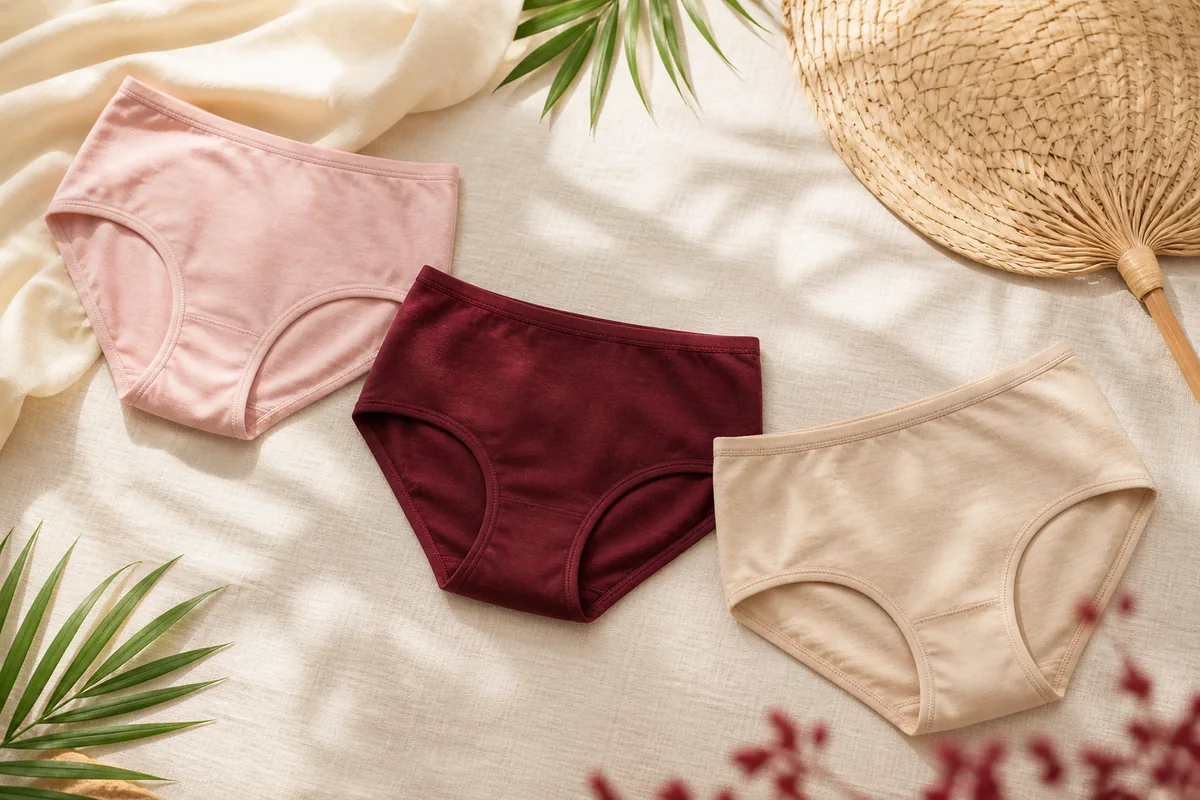
If you’ve ever walked from a BTS station to a midday meeting, sat through a two-hour lecture with no strong air conditioning, or spent a weekend wandering street food stalls in 35°C heat, you know the constant small frustration of underwear that feels sticky, clingy, or damp 20 minutes after you leave the house. The best breathable underwear for hot weather doesn’t require fancy, unproven technology or a high price tag—it just needs to align with the choices that work for your daily routine, your body, and Thailand’s year-round warm, humid climate. There’s no single “perfect” pair that works for everyone, but breaking down choices by fabric, gusset design, rise, and fit makes it easy to find options that feel unnoticeable even on the hottest days.
Start with fabric choices built for humid, high-heat days
Fabric is the first factor that determines how breathable a pair of underwear will feel, because it directly impacts how air moves next to your skin and how quickly moisture from sweat dries. You don’t need to memorize technical fabric specs; instead, focus on how different common materials behave when you are warm and moving through your day. Remember that every brand blends fabrics differently, so a material that feels light and airy from one label might feel thicker from another.
The most common fabric options for hot weather wear include:
- Lightweight 100% cotton: A longtime favorite for warm days, cotton is soft, allows steady air flow, and is easy to wash. It works well for low-activity days spent in air-conditioned spaces with short walks outside, though it can hold onto moisture for longer if you are sweating heavily for extended periods.
- Cotton-modal blends: Modal is a soft, lightweight plant-based fiber that often feels smoother than plain cotton, and when blended with cotton, it can dry a bit faster while retaining that soft, non-irritating feel against skin. It is a popular pick for all-day wear for commutes, office days, and casual outings.
- Lightweight moisture-wicking synthetic blends: These blends are designed to pull moisture away from the skin so it dries quickly on the fabric surface, making them a solid choice for days with lots of walking, outdoor errands, or casual movement. Opt for thin, open-weave versions rather than thick, compression-style synthetics, which can trap heat close to the body.
- Mesh panel fabrics: Many everyday underwear styles include thin mesh panels along the sides or back to boost air flow without adding bulk. These work well for extra hot days, as long as the mesh feels soft against your skin rather than scratchy.
There are also a few fabrics you may want to skip for long hot-weather days if you find they trap heat for you: heavy satin, thick lace with no open weave, 100% heavy polyester, and vinyl or latex accents, all of which can block air flow and hold moisture close to the skin. That said, these fabrics work perfectly for short, special occasions when you prioritize a specific look over multi-hour outdoor comfort—there is no rule that says you can’t have fun, stylized pieces in your collection alongside your everyday go-tos. You can browse a wide range of everyday and stylized options in our panties collection to match different days and needs.
How gusset design impacts day-long breathability
The gusset is the small, lined panel in the crotch of every pair of underwear, and it plays a bigger role in hot weather comfort than many people realize. When you are shopping for pairs to wear in high heat, there are a few simple gusset features to look for, no medical claims required—these choices are all about what feels comfortable and dry against your skin as you move.
First, look for gussets made with a soft, uncoated natural fiber layer, rather than a gusset lined with waterproof or plastic-backed material. Non-breathable gusset linings trap heat and moisture right against the body, which can lead to that sticky, damp feeling even if the rest of the underwear is made of lightweight fabric. Second, pay attention to gusset width: a gusset that is too narrow for your body can shift as you walk, leading to fabric bunching that rubs and traps sweat, while a gusset that is aligned with your shape will stay in place without extra tightness. Finally, avoid gussets with extra sewn-in padding, thick seams, or chemical finishes advertised as “odor-fighting” or “sweat-proof,” as these extra layers can reduce air flow and often wear off quickly after regular washing. You can learn more about how to keep your underwear in good shape for longer with our simple lingerie care guide, so your favorite breathable pairs hold their shape wash after wash.
Choose a rise that matches your outfits and comfort preferences
Rise refers to how high the waistband of your underwear sits on your torso, and the right rise for hot weather depends less on arbitrary rules and more on what you wear on top, and what feels secure on your body. Many people assume that lower-rise underwear is always cooler, but that is not universally true—what matters most is that the waistband sits where it does not dig in, roll, or trap extra fabric against your skin.
| Rise type | Best for | Hot weather comfort note |
|---|---|---|
| Low-rise | Low-rise pants, shorts, mini skirts, swim cover-ups | Sits below the natural waist, so less fabric covers your lower abdomen; look for soft, non-pinching waistbands to avoid rolling when you walk. |
| Mid-rise | Most everyday outfits: high-waisted shorts, jeans, midi skirts, office wear | The most versatile option for daily wear, as it sits just at the natural waist without extra fabric up the torso; choose lightweight waistbands rather than thick, tight elastic for better air flow. |
| High-rise | High-waisted pants, loose flowy dresses, days when you prefer more coverage around your midsection | Opt for thin, stretchy fabric rather than heavy control-style panels, which trap heat. Lightweight high-rise pairs can feel just as cool as lower rises if they are made with breathable fabric. |
Remember that rise measurements vary wildly between brands: one brand’s mid-rise might fit like another brand’s low-rise, depending on how they cut their patterns. There is no “right” rise for any body type—only what feels stable and non-restrictive for you, no matter what size you wear.
Fit tips for all-day comfort, no pinching or bunching
Even the most breathable fabric will feel uncomfortable if the fit is off, but fit is highly personal, and there is no universal size standard across brands in Thailand or elsewhere. A size that fits perfectly from one label might feel too tight or too loose from another, so treat every size chart as a starting point, not a strict rule. You can reference our size guide as a baseline when you shop, but don’t be surprised if you need to adjust based on the specific cut of a style.
Use this simple checklist when trying on new underwear for hot weather wear:
- Waistband test: Pull the waistband gently away from your body—it should have enough stretch to move with you without digging into your skin or leaving deep indentations after 10 minutes of wear. If you have to constantly yank it up or adjust it when you bend or walk, the fit is not right for you.
- Leg opening test: The leg elastic should sit flat against your skin without pinching the tops of your thighs, and it should not ride up as you walk or sit. Leg openings that are too tight trap sweat and cause chafing on long walks, while openings that are too loose can bunch and feel bulky under clothes.
- Fabric drape test: The main body of the underwear should lie smoothly against your skin without pulling across your hips or buttocks, but it should not be so tight that it clings to every curve. A little bit of space between fabric and skin allows air to circulate, which helps you stay cooler.
- Seam check: Look for flat, soft seams rather than thick, raised sewn edges, which can rub against skin when you sweat and cause irritation through the day. Seamless styles work well under tight dresses or thin pants, but make sure the seamless fabric is lightweight and breathable, not thick and synthetic.
It is completely normal to have a small rotation of different styles for different days: you might reach for moisture-wicking mesh pairs for days you are running errands across the city, soft cotton-modal pairs for work days spent mostly in air conditioning, and a few fun lace or satin pairs for evenings out or date nights. You can also pair your comfortable everyday underwear with lightweight, supportive styles from our bras collection for a full outfit that feels cool from top to bottom, no matter how high the temperature climbs.
When you are building your collection, don’t feel pressured to stock up on a dozen of the exact same pair right away. Start with one or two styles in different fabrics and rises, test them through a full day of regular wear (including a commute, time outside, and time sitting indoors), and note what feels best for you. Over time, you will build a set of go-to pairs that feel so light and comfortable, you will barely notice you are wearing them, even on the hottest April afternoons in Bangkok or the most humid rainy season days in Chiang Mai.
Frequently asked questions
How often should I replace breathable underwear for hot weather wear?
There is no strict timeline, but replace pairs when the fabric becomes thin, stretched out, pilled, or the elastic starts to roll or lose its stretch. Worn-out fabric traps more moisture and is less breathable, even if it was originally a lightweight, airy material.
Can I wear lace underwear comfortably in Thailand’s hot weather?
Yes, as long as you choose lace with an open, loose weave that allows air flow, paired with a soft, breathable gusset. Thick, heavy lace with a tight weave can trap heat, but lightweight, unlined lace styles work well for daily wear if they fit you comfortably.
Are thongs breathable enough for hot weather?
Thongs can be a breathable option for many people, as they have less fabric overall than full-coverage styles. Look for thongs made with lightweight, soft fabric and a narrow, non-bulky gusset, and avoid styles with thick elastic or plastic hardware that can trap heat or rub.
Should I size up in underwear for better air flow in hot weather?
Sizing up is not always necessary, and can lead to bunching, rolling waistbands, and extra fabric that traps moisture instead of improving air flow. Instead, choose styles in your regular size that have gentle stretch, smooth leg openings, and lightweight fabric that lies flat without tight compression.
 How to Choose Swimsuit Size: A Practical Fit Guide for One-Pieces and Bikinis in Thailand
 The Best Sleepwear for Hot Nights: Breathable Picks for Thailand’s Warm, Humid Climate
 The Best Bras for Hot Humid Weather: Comfortable Picks for Thailand’s Climate