


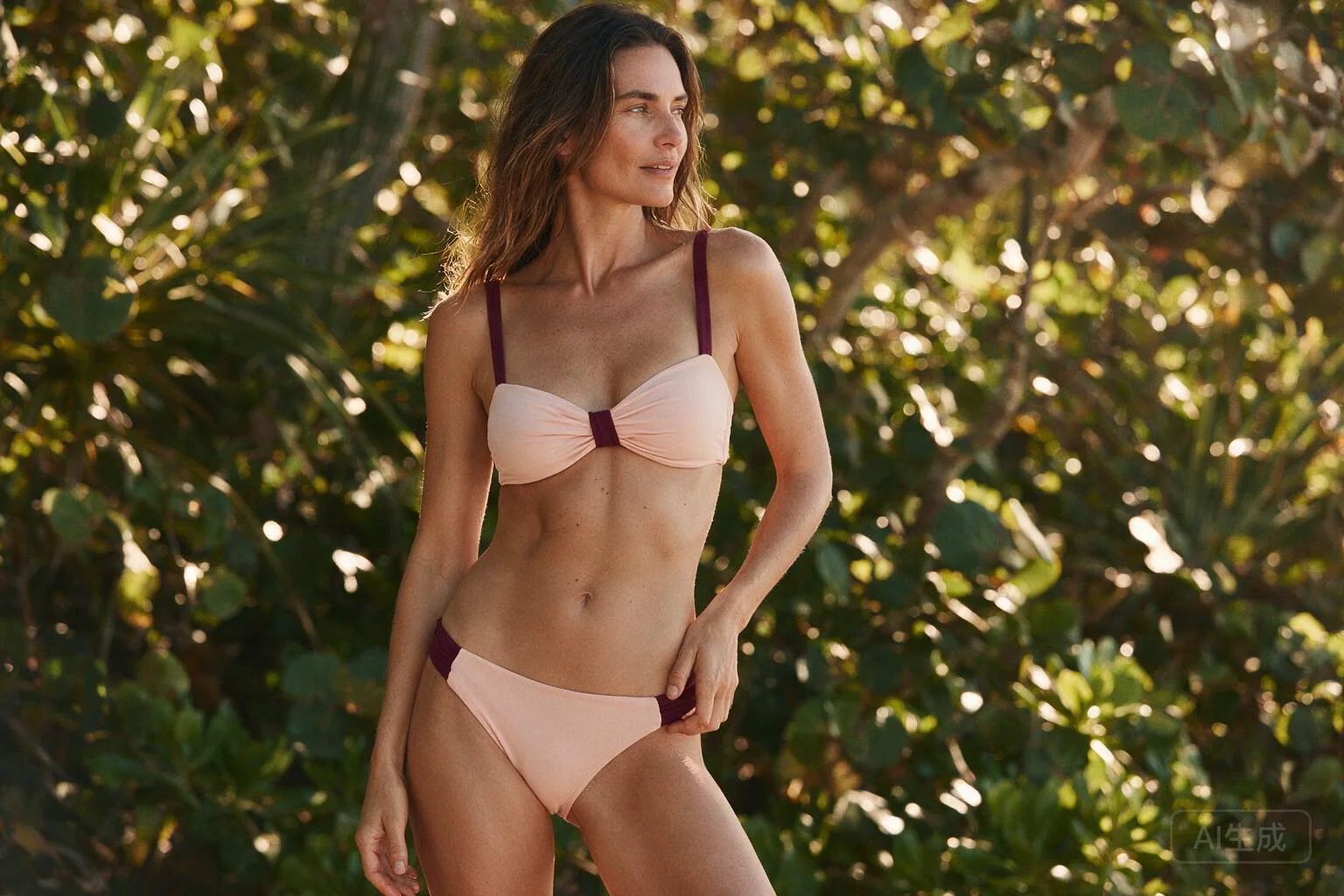
Whether you’re packing for a day trip to calm shorelines, planning a weekend getaway to hidden coves, or heading to a rooftop pool hangout, the last thing you want to do is spend your time adjusting slipping straps, digging bands, or shifting bottoms. If you’ve ever asked how a bikini should fit, you’re not alone—great bikini fit is personal, varies widely by brand and style, and has nothing to do with hitting a specific size on a tag. This guide walks through simple, no-fuss fit checks for every part of your bikini, so you can focus on enjoying your time instead of fidgeting with your swimwear.
Before diving into specific checks, remember: size charts are always a starting point, not a rule. Every brand cuts its swimwear differently, even within the same size label, and fabric blends, style details (like ruching, underwire, or high-cut legs), and intended use (like active swimming vs. casual sunbathing) all change how a piece will sit on your body. We recommend keeping our size guide open as you browse, but always prioritize how a piece feels on your body over the number or letter on the tag.
Bikini Top Fit Checks, From Straps to Cups
A well-fitting bikini top should feel secure without squeezing, stay put as you move, and never leave you constantly reaching to adjust it. We break down each component to check below, with quick pass/fail cues to look for when trying pieces on.
The Underband: Core Support for Many Styles
For many bikini top styles—triangle, balconette, sporty, lightly lined (featuring thin, structured non-foam lining), or bralette—the underband contributes significantly to keeping your top in place, though styles like halter tie tops may draw primary support from neck straps. When you first put on a top, fasten it to the loosest set of hooks (if it has hook closures) so you have room to tighten it as the fabric stretches slightly with wear and water exposure.
- Good fit sign: The band sits level all the way around your ribcage, parallel to the floor, without riding up in the back or digging deep enough to leave lasting indentations when you take the top off. You should be able to slide one finger comfortably between the band and your skin, no more and no less.
- Adjustment needed if: The band rides up your back even when fastened on the tightest hook, or if it feels so tight that it restricts your breathing when you take a deep breath. If the band is too loose, size down or try a style with a wider band for more grip; if it’s too tight, size up or look for styles with stretchier, softer ribcage bands.
Straps: No Slipping, No Digging
Strap fit changes a lot depending on top style: thin string straps, wide athletic straps, adjustable halter ties, and fixed spaghetti straps all sit differently, so don’t hold every style to the same standard.
- Good fit sign: Adjustable straps sit comfortably on your shoulders without slipping down when you lift your arms overhead, and without digging into your skin enough to cause soreness after an hour of wear. For tie-back or halter styles, you can tighten or loosen the ties to get a custom fit that feels secure without pulling on your neck.
- Adjustment needed if: Straps slip constantly even when fully tightened, which usually means the band is too loose and riding up, rather than the straps themselves being too long. If straps dig into your shoulders or neck even when loosened fully, try a style with wider straps for more distributed support, or size up if cups feel overly snug to avoid pulling the straps too tight.
Cups: No Gapping, No Spillage
Cup fit is one of the most personal parts of bikini top fit, and what feels “right” will depend on your preference for coverage—some people prefer minimal, skimpy coverage, while others want full coverage for swimming or sports. There is no “correct” amount of coverage, only what feels good for you.
| Cup Style | Good Fit Cues | Adjust If You Notice |
|---|---|---|
| Triangle cups (no underwire) | Cups cover as much of your breast tissue as you prefer, with fabric lying smooth against your skin without pulling. Center of the triangle sits flat against your sternum without gaping away from your body. | Gaping fabric at the top of the cup when you stand up straight (usually means the cup is too big, or the straps are too loose), or breast tissue spilling out the sides, bottom, or top of the cup in a way that feels uncomfortable to you (usually means the cup is too small, or the band is riding up). |
| Underwire cups | The wire sits flat against your ribcage all the way around, resting directly under your breast tissue without pressing on breast tissue itself, and the center gore between cups lies flat against your sternum. | Wire poking into the sides of your breasts or sitting on top of breast tissue (usually a sign the cup is too small), or the wire sitting far away from your sternum even when the band is snug (usually a sign the cup size is too large, or the style is not the right shape for your body). |
| Bralette/soft crop tops | Fabric stretches smoothly over your breast tissue without pulling tight across the fullest part, and stays in place when you bend forward. | Fabric pulling so tight across the front that it creates horizontal lines across your breasts (usually a sign the top is too small), or the top sliding down so far that you need to pull it up every few minutes (usually a sign the band is too loose). |
Remember that cup volume scales with band size, so equivalent cup and band combinations across different sizing systems will hold the same volume—if your band fits great but the cups feel too small or too big, you can adjust your cup size without switching band sizes to get a better fit, depending on the brand’s sizing structure.
Bikini Bottom Fit Checks, From Rise to Leg Openings
Just like tops, bikini bottoms come in a huge range of styles, from super skimpy thongs and cheeky cuts to high-waisted full-coverage boyshorts, and there is no universal “right” coverage level. The right fit for you is the one that feels secure, doesn’t dig in, and matches the coverage you want for your day.
Rise: Sitting Where It’s Supposed To
Bikini bottom rise ranges from low-rise (sitting on your hips a few inches below your belly button) to mid-rise (sitting at or just below your belly button) to high-rise (sitting at or above your belly button, often extending up to your natural waist). When you try a bottom on, first check that it sits at the intended rise point without constant adjustment.
- Good fit sign: The waistband sits at your preferred height on your hips or waist without rolling down when you walk, sit, or bend over. For high-waisted styles, the fabric lies smooth across your stomach and hips without bunching or rolling when you sit down.
- Adjustment needed if: The waistband rolls down constantly, even when you pull it up fully—this is usually a sign the waistband is too loose, or the rise is too short for your torso. If the waistband digs in so much that it creates a deep indent or feels uncomfortable after a few minutes of wear, try sizing up, or look for a style with a wider, softer waistband that has more stretch.
Leg Openings and Seat Coverage
Leg cut has a huge impact on both comfort and how a bottom looks: high-cut legs lengthen the appearance of your legs, while lower-cut legs offer more coverage around the hips. Your preferred coverage is totally up to you, but these checks will help you avoid constant adjusting.
- Good fit sign: Leg openings sit comfortably against your skin without digging into the crease of your hips or thighs, and the back of the bottom covers as much of your seat as you want it to, without riding up when you walk, swim, or sit down. You should be able to squat, take a broad, comfortable wide stance, or climb stairs without needing to pick the fabric out of your seat or pull it down from riding up.
- Adjustment needed if: Leg openings dig into your skin and leave noticeable marks after a few minutes, or if the fabric cuts into your hips in a way that feels restrictive. If the back rides up constantly no matter how much you adjust it, that usually means the leg openings are too tight, or the seat of the bottom is cut too small for your preference—try sizing up, or looking for a style with more generous seat coverage, like a cheeky or boyshort cut instead of a thong or high-leg style if that’s more your speed.
The Movement Test: The Most Important Check of All
How a bikini looks when you’re standing still in a fitting room is only half the story—you’ll be walking, swimming, sitting, eating, laughing, and playing when you wear it out, so a quick movement test will save you from hours of fidgeting later. When you try a bikini on, go through these quick movements before you decide to keep it:
- Lift both arms straight overhead as if you’re reaching for something on a high shelf, or waving to a friend at the pool. If your top rides up, your band is too loose, or your straps need tightening. If your bottoms slide down, the waistband is not snug enough, or the rise is not matched to your torso.
- Bend forward at the waist as if you’re picking up a towel off the sand, then stand back up. Check that your top stays in place without exposing more of your breasts than you’re comfortable with, and that your bottoms don’t slide down or shift out of place.
- Squat down as if you’re sitting on a low beach chair, then stand back up. Notice if the waistband of your bottoms rolls, if the legs of the bottom ride up, or if the underband of your top shifts up your back.
- Take a few quick steps or jog gently in place (if you have space in the fitting room) to mimic walking along the beach or getting in and out of the pool. If anything slips, shifts, or feels like it’s going to come undone, adjust the fit or try a different size or style.
It’s completely normal if one style from a brand fits you perfectly, and another style from the same brand in the exact same size fits poorly—cut, fabric stretch, and design details all change how a piece fits, so don’t feel like you have to “fit into” a specific size across every style. If you’re browsing for new options, our curated swimwear collection includes styles across coverage levels and cuts, so you can mix and match tops and bottoms to get your ideal fit, rather than being stuck with a pre-matched set that doesn’t work for your proportions.
Once you find a bikini that fits exactly how you like it, you can make it last longer by following simple care steps, like rinsing it in cold water after swimming in saltwater or chlorinated pools, and avoiding harsh detergents that break down stretch fabric. Check out our lingerie and swimwear care guide for simple tips to keep your favorite pieces in great shape for every beach trip, pool day, and tropical holiday.
As a final note: there is no narrow, arbitrary standard for a “bikini body” — every body that wears a bikini is a bikini body, and fit is only about your comfort and confidence, not anyone else’s standards. If a bikini feels good to you, that’s the perfect fit.
When you’re ready to find your next go-to set, start by jotting down the fit features you know work for you—like adjustable straps, high-waisted bands, or soft triangle cups—to narrow your search faster, and don’t hesitate to order two sizes of a style you love if you’re between sizes, to find the one that feels most secure. You can also reference our full shop page to filter styles by coverage, cut, and fabric type to match your preferences.
Frequently asked questions
Should I size up or down in a bikini if I’m between sizes?
It depends on the style and your comfort preference. If you prefer more coverage or plan to swim actively, you may prefer sizing up for extra room; if you prefer a snug fit for minimal movement, sizing down may work for styles with lots of stretch. Always check the specific product’s size notes, and remember that hook closures and tie straps let you adjust the fit slightly within a size.
Will my bikini stretch out when it gets wet?
Most swimwear fabrics stretch slightly when wet, especially after repeated exposure to chlorine or saltwater, which is why we recommend fastening tops on the loosest hook when new, so you can tighten them as the fabric relaxes over time. Rinsing your bikini in cold water after wear helps preserve stretch for longer.
Can I mix and match bikini top and bottom sizes?
Absolutely! Many people have different size needs for tops and bottoms, so mixing sizes is a great way to get a better fit. Look for brands that sell separate tops and bottoms rather than only pre-matched sets to customize your fit perfectly.
How tight should a bikini be when it’s brand new?
A new bikini should feel snug but not restrictive when dry. If it feels perfectly loose and easy to move in when dry, it may stretch too much when wet and start slipping as you wear it. You should be able to breathe, sit, and move comfortably, but not have excess loose fabric that gaps away from your skin.
 One Piece Swimsuit vs Bikini: Choosing for Activity, Fit and Style
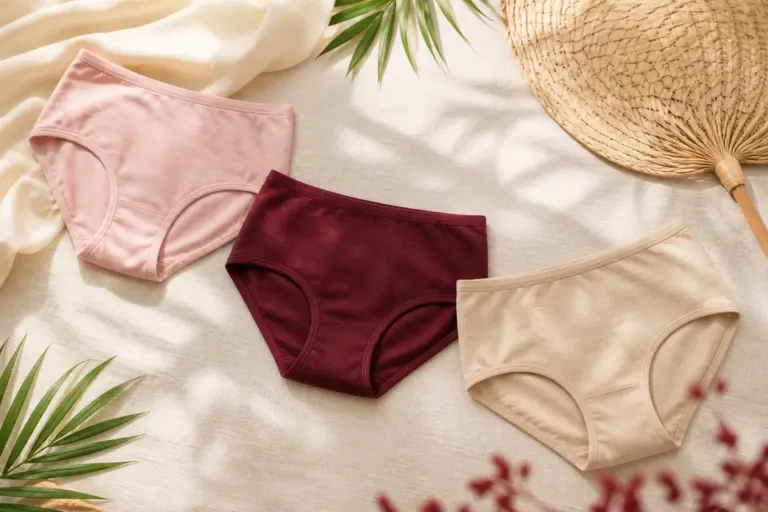 How to Pick the Best Breathable Underwear for Hot Weather in Thailand
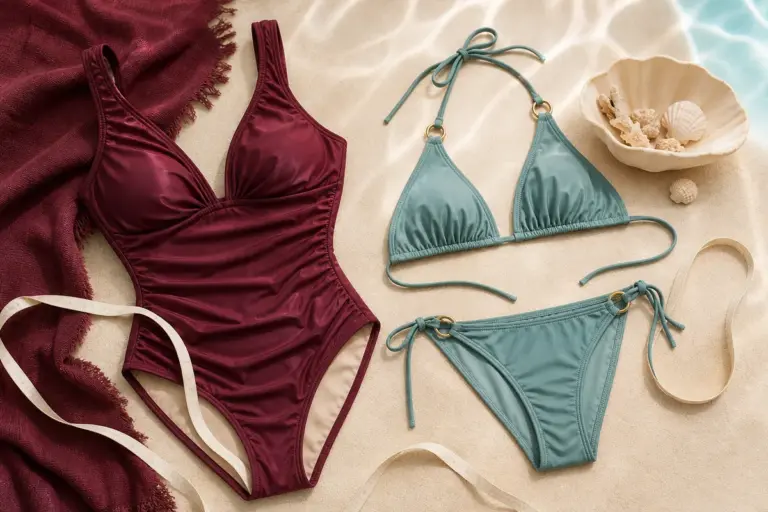 How to Choose Swimsuit Size: A Practical Fit Guide for One-Pieces and Bikinis in Thailand