


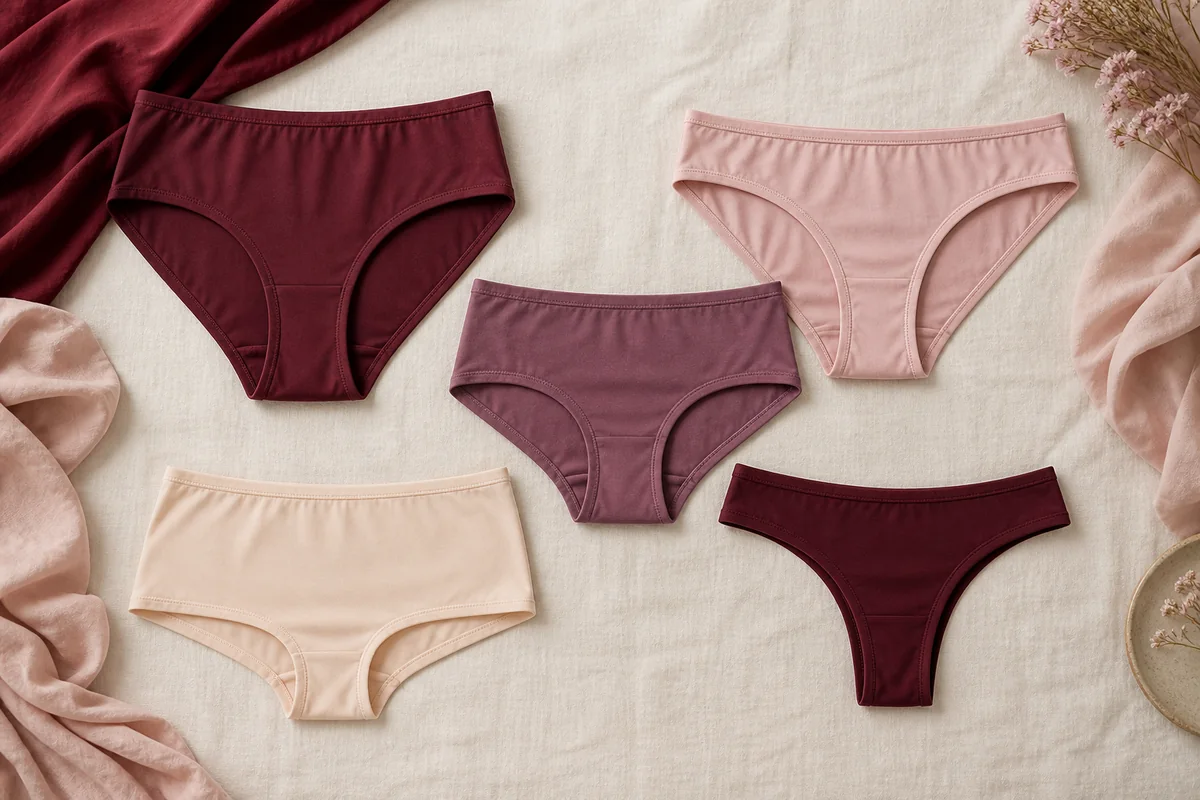
When you’re building a lingerie drawer that works for every part of your routine, understanding different types of panties takes the guesswork out of getting dressed. Whether you’re heading to a long work day, meeting friends for a night out in Bangkok, dressing for a temple visit, or lounging at home, the right pair can eliminate awkward adjustments, visible lines, or uncomfortable pinching before you even step out the door. There is no “best” style across the board—what feels perfect for one person, outfit, or occasion might not work for another, and fit will always vary by brand, cut, and fabric, so treat general guidance as a starting point rather than a strict rule.
This guide breaks down the five most common everyday styles—briefs, bikinis, hipsters, boyshorts, and thongs—by three practical, easy-to-compare factors: back and front coverage, rise (where the waistband sits on your torso), and the outfits they work best with. We’ll skip the outdated rules about who “should” wear which style, and focus solely on how each design functions, so you can curate a mix that matches your wardrobe, comfort preferences, and plans. Before you shop, it’s always helpful to bookmark our size guide to reference general measurement starting points, remembering that every brand’s cut will fit a little differently.
Quick Comparison Cheat Sheet for Common Panty Styles
If you’re in a hurry sorting through laundry or picking an outfit for the day, this at-a-glance table breaks down the core traits of each style to cut down on decision time. Remember that individual styles may deviate from these norms: some brands make high-rise bikinis, low-rise briefs, or extra-coverage thongs, so always check product descriptions for specific cut details when browsing.
| Style | Average Coverage | Typical Rise | Best For Outfits Like |
|---|---|---|---|
| Briefs | Full front and back coverage, cut high or straight across the leg | Mid to high, sitting at or just above the natural waist | High-waisted pants, midi skirts, loungewear, long travel days |
| Bikinis | Moderate front and back coverage, higher leg cuts than briefs | Low to mid, sitting a few inches below the natural waist | Low-rise shorts, summer dresses, casual everyday wear |
| Hipsters | Moderate to full front and back coverage, low-cut leg openings | Low, sitting straight across the hips a few inches below the navel | Low-rise jeans, fitted t-shirts, workout leggings, weekend outfits |
| Boyshorts | Full back and front coverage, cut straight across the upper thigh | Mid to low, sitting at hip level | Skater skirts, sleepwear, loose flowy dresses, days you want extra fabric coverage |
| Thongs | Minimal back coverage, narrow strip of fabric between the cheeks, full or narrow front panel | Low to high, available in every rise option | Bodycon dresses, tight trousers, sheer fabrics, formal event wear |
Breakdown of Each Panty Type: What to Expect
Briefs
Briefs are the classic, long-loved staple many people first encounter as an everyday undergarment, and for good reason: their full coverage design means they stay in place well through long days of walking, sitting, or running errands. Most traditional briefs have a waistband that sits at or just above your natural waist, with leg cuts that can range from straight across to high-cut styles that elongate the look of the leg without reducing core coverage. You’ll find briefs in every fabric from soft cotton for everyday wear to smooth microfiber for under fitted clothes, and even lace versions for days you want something that feels a little special.
Because of their higher rise, briefs pair beautifully with high-waisted jeans, tailored trousers, midi skirts, and traditional wrap bottoms that sit higher on the torso. They are also a reliable pick for long travel days, periods, or times when you don’t want to worry about adjusting your underwear throughout the day. It’s worth noting that some brief cuts have wider side bands, which may show under very tight, thin, or low-cut tops that sit near the hip bone. If you’re building a core set of everyday basics, you can browse a wide range of everyday cuts in our panties collection to find fabric and cut combinations that match your routine.
Bikinis
Named for their similar cut to classic swimwear bikini bottoms, bikini panties offer less side coverage than briefs, with higher leg openings and a waistband that typically sits low to mid-way on the hips. They deliver moderate coverage on both the front and back—less fabric than a brief, but more than a thong—making them a versatile middle ground for people who don’t want full coverage but also don’t prefer minimal back fabric.
Bikinis are a flexible everyday pick that works with most casual outfits, from low-rise denim shorts to flowy summer sundresses, loose linen pants, and everyday skirts. Their narrower side bands mean they are less likely to show under clothes that sit a little lower on the hip, though they may leave visible panty lines under extremely tight, thin fabrics if you pick a style with thick seams or lace edging. Many people keep a pack of soft cotton or seamless microfiber bikinis on hand as a grab-and-go option for days when they don’t have a specific outfit requiring a specialty cut.
Hipsters
Hipsters are designed to sit straight across your hip bones, a few inches below your natural waist, with wider side bands than bikinis and lower-cut leg openings that don’t ride high on the thigh. They typically offer moderate to full coverage on both front and back, making them a popular pick for people who find low-rise bikinis too skimpy but don’t want the higher waist of a classic brief.
Their low, even rise makes hipsters ideal for pairing with low-rise jeans, fitted t-shirts, workout leggings, and casual weekend outfits where a higher waistband might peek out over the top of your bottoms. Because the leg openings sit lower, they also tend to stay in place well during walking, light exercise, or long days spent running from meeting to meetup. If you find that other styles dig into your hips or ride up throughout the day, testing a hipster cut in a soft, stretchy fabric may be a good alternative, as their even waistband distributes pressure gently across the hip line.
Boyshorts
Modeled after the cut of short men’s boxer briefs, boyshorts feature a straight cut across the upper thigh, full front and back coverage, and a waistband that usually sits at hip level, with some styles rising to mid-waist. They are known for having little to no leg cut-out, which means fabric extends a little further down the upper thigh than other panty styles, eliminating the elastic leg band that can sit high on the hip on briefs or bikinis.
Boyshorts work beautifully with skater skirts, flared dresses, loungewear, and sleepwear, as their extended leg coverage eliminates the risk of exposure if your skirt rides up a little as you sit or walk. They are also a popular pick for people who find elastic leg bands on other styles uncomfortable, as the wider cut can reduce pressure on the upper thigh. Some seamless boyshort cuts work well under loose-fitting trousers, though thicker lace or cotton styles may show visible lines under extremely tight clothes. If you’re looking for soft, comfortable options for lazy days at home, you can pair cozy boyshorts with pieces from our sleepwear collection for a full, relaxed at-home outfit.
Thongs
Thongs are defined by their minimal back coverage: a narrow strip of fabric sits between the buttocks, with no wide back panel, which eliminates visible panty lines under tight or sheer fabrics. They come in every possible rise, from low-rise cuts that sit below the hip bone to high-waisted thongs that sit at or above the natural waist, with front panels ranging from narrow, minimal coverage to full, supportive panels that match the front coverage of a brief.
Thongs are the go-to pick for outfits where visible panty lines would disrupt the clean line of your clothes: think bodycon dresses for weddings or nights out, tight tailored trousers, sheer skirts, silk pants, or lightweight linen outfits where fabric is thin enough to show every seam. A common myth is that all thongs are uncomfortable, but fit and fabric make a huge difference: soft, stretchy thongs with the right rise for your outfit can stay in place all day without pinching or riding up, just like any other style. If you’re picking pieces for a special event, you can match seamless thongs with pieces from our lingerie sets to create a cohesive look that works under even your most fitted going-out outfits.
Practical Tips for Building Your Panty Drawer
There’s no rule that says you have to stick to one style forever. Most people find that a mix of 3-4 different cuts covers every outfit and mood they encounter in a typical week, and it’s normal to reach for different styles on different days depending on how you feel, what you’re wearing, and what you have planned. Keep these simple tips in mind as you curate your collection:
- Always try on new styles when you can, and move around a little: sit, bend, and walk to check if the waistband rolls, legs ride up, or fabric pinches before you commit to wearing them for a full day. Remember that fit varies widely by brand, so your usual size in one style or brand may fit differently in another.
- When picking a style for a specific outfit, do a quick mirror check in natural light, as thick seams, lace edges, or contrasting colors may show under thin or light-colored fabric even if they feel hidden indoors.
- Keep 2-3 pairs of seamless options in neutral tones that match your skin on hand for last-minute outfit changes that require no visible lines, so you don’t have to scramble before an event.
- Rotate your panties regularly and follow simple care tips, like washing on gentle cycles and avoiding high heat drying, to keep elastic stretchy and fabric soft for longer. You can reference our lingerie care guide for simple steps to extend the life of all your pieces.
At the end of the day, the right panty style for any moment is the one that feels comfortable for you, works with your outfit, and lets you focus on your day instead of what you’re wearing under your clothes. There is no “right” number of styles to own, no body type that is “meant” for one cut over another, and no reason to force a style that doesn’t feel good just because it’s trendy. Start by auditing your current drawer to note which cuts you already reach for most, and test one new style at a time to see if it fills a gap for outfits you currently struggle to dress for.
Frequently asked questions
How do I pick the right rise of panties for my outfit?
Match the rise of your panties to the rise of your bottoms as a starting point: high-rise pants and skirts pair best with mid or high-rise styles to avoid a visible waistband, while low-rise bottoms work with low-rise bikinis, hipsters or low-rise thongs. You can always adjust based on personal preference, but this rule eliminates most peekaboo waistband moments.
Do I need to own every type of panty?
Not at all. Many people stick to 1-2 favorite styles that work for 90% of their wardrobe, and only add specialty cuts if they have specific outfits that require them. There is no mandatory set of styles every person needs—only what works for your clothes and comfort.
Why does the same size fit differently across panty styles?
Every cut uses different pattern measurements, elastic stretch levels and fabric blends, even within the same brand. A style with more stretch may feel looser, while a structured lace style may fit more snugly, so it is normal to go up or down a size depending on the specific design.
Can I wear any style of panty during exercise?
It depends on your personal comfort and the fabric of the panty. Many people prefer moisture-wicking, full-coverage styles like hipsters or briefs for workouts to avoid fabric riding up, but if a thong or boyshort stays in place and feels comfortable for you during movement, there is no rule against it.
 Robe vs Kimono Sleepwear: Cut, Sleeve, Closure, Fabric and Layering
 How to Style Sheer Lingerie: Tasteful Layers and At-Home Looks
 Three Piece Lingerie Set Guide: How to Wear and Style Sets