


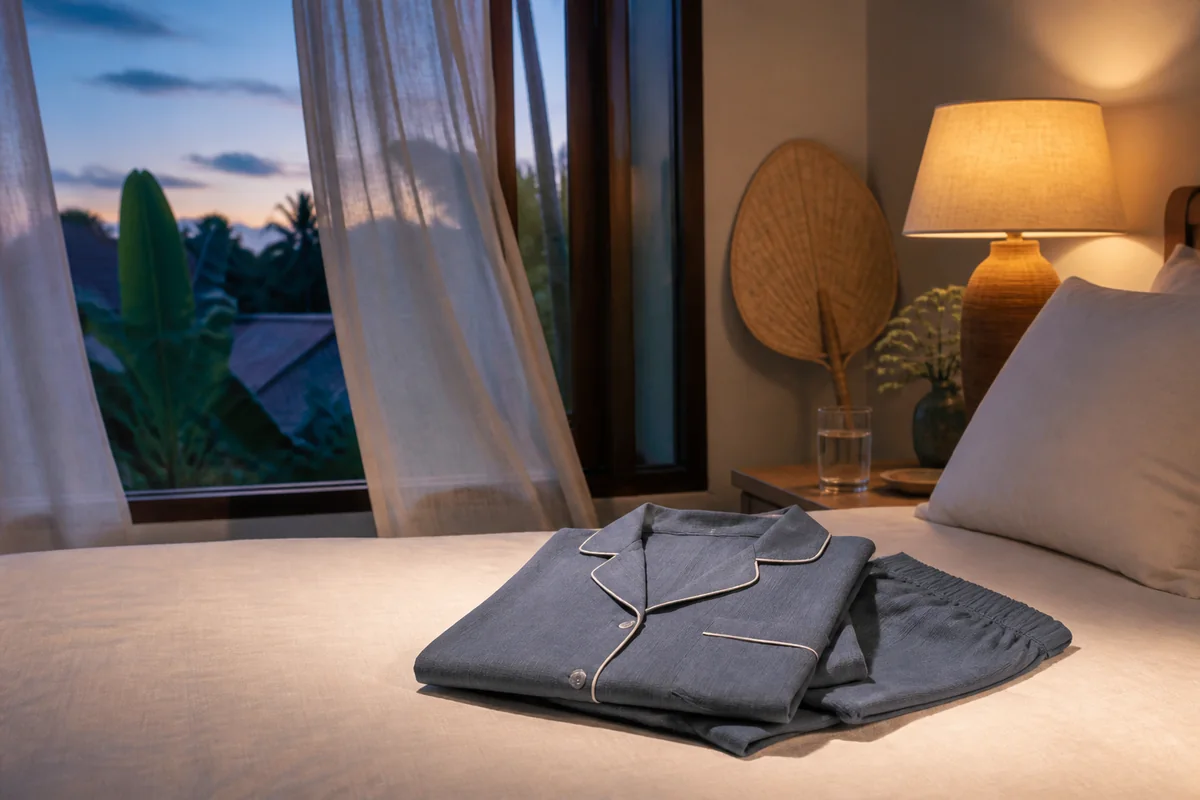
If you’ve ever woken up in the middle of a Thai April night sticky with sweat, twisting in tangled bed sheets and kicking off a too-heavy nightgown, you know how much difference the right sleepwear makes. The best sleepwear for hot nights doesn’t just look soft—it works with Thailand’s year-round warm, humid air to let your skin breathe, so you can sleep through monsoon mugginess and summer heat spikes without constant adjustments. You don’t have to sacrifice comfort for cute, either: there are simple, approachable picks for every sleep style, from people who run hot year-round to those who just want a little light coverage for late-night snack runs to the fridge.
Start with fabric: the biggest factor for cool, low-fuss nights
When humidity hovers high for months on end, fabric choice matters far more than fancy details or trendy cuts. The goal is to pick materials that let air circulate close to your skin, rather than trapping heat and moisture against your body. It’s worth noting that fabric feel can vary widely between brands even for the same fiber name, so if you can feel a sample in person or check return policies before buying, that’s always a smart first step.
| Fabric type | What makes it work for hot nights | Best for |
|---|---|---|
| Lightweight 100% cotton | Loosely woven cotton lets air pass through easily, and absorbs light surface moisture without feeling clammy against skin | People who prefer natural fibers, those who run mildly hot at night |
| Linen | Ultra-breathable, lightweight, and gets softer with every wash; it holds very little heat close to the body | Extra-hot peak summer months, people who don’t mind a slightly textured, lived-in feel |
| Lightweight modal | Smooth, soft, and more moisture-wicking than basic cotton, with a drape that doesn’t stick tight to damp skin | People who dislike wrinkled fabrics, those who want a soft, silky feel without satin’s slip |
| Open-knit mesh (cotton or modal blend) | Built-in gaps in the knit let maximum airflow circulate, even when fabric rests against your skin | People who run extremely hot, those who prefer minimal coverage without going fully unclothed |
You’ll want to skip heavy, tightly woven fabrics like thick flannel, fleece, or heavy satin for most Thai nights, as these tend to trap heat close to the body and can feel sticky once you start to sweat. It’s also wise to avoid pieces with large, stiff embroidered patches or thick non-breathable trim across the chest or back, as these can create hot spots even if the main fabric is lightweight.
Breathable sleepwear shapes made for humid weather
Even the coolest fabric will feel uncomfortable if the cut is too tight, too long, or covered in constricting details. The best shapes for hot nights prioritize loose, easy drape that doesn’t cling to damp skin, with minimal tight elastic or restrictive seams. Remember that fit varies by brand and style—there’s no universal “right” size, so use size charts as a starting point only, and pick what feels loose and easy on your body, rather than fixating on a specific size label.
Slip dresses and chemises
Short, sleeveless slips are a classic pick for warm weather for good reason: they have minimal fabric covering your arms and legs, and a straight or gently A-line cut hangs away from the body instead of clinging. Look for styles with thin, soft straps rather than thick, wide elastic straps that can trap sweat on your shoulders. Knee-length or mid-thigh lengths work well for most people, as they offer enough coverage to move around the house comfortably without bunching around your legs as you sleep. If you prefer longer coverage, look for maxi slips with side slits to let air circulate around your calves.
Short sleep sets
If you don’t like the feel of a one-piece nightgown twisting around you as you sleep, a loose camisole paired with soft sleep shorts is a reliable pick. Opt for shorts with a wide, soft elastic waistband rather than a tight, narrow band that digs in or traps sweat around your midsection. Many people prefer sets with pull-on tops that have no built-in cups or tight elastic underbands, as these eliminate extra layers across the chest that can hold heat. You can browse curated warm-weather styles in our sleepwear collection to find cuts that match your preferred coverage level.
Loose camisole tops and tap pants
For people who want even less fabric than standard sleep shorts, tap pants—lightweight, loose-fitting shorts with a wide leg cut that hits high on the thigh—pair beautifully with thin camisoles for barely-there coverage. This shape works especially well if you toss and turn a lot at night, since there’s no tight leg elastic to ride up or bunch as you move.
Open-front sleep shirts
Button-front sleep shirts made from lightweight cotton or linen are a versatile pick for people who like adjustable coverage: you can leave a few buttons undone for extra airflow on extra-sticky nights, or button up more if you have the air conditioning running extra cool. Look for styles with flat, small buttons rather than large, heavy plastic buttons that can press uncomfortably against your skin as you sleep.
Quick checklist for picking hot-night sleepwear that works for you
- Do a drape test: Hold the fabric up to a light source—if you can see soft light through the weave, it’s likely breathable enough for warm nights; if light doesn’t pass through at all, the weave is probably too tight for high humidity.
- Check for scratchy tags or stiff trim: Even soft fabric can feel irritating if it has a scratchy tag sewn into the neckline or thick, non-stretchy lace around the armholes that traps sweat. Many brands now use tag-free labels, or you can snip tags out carefully at home if they bother you.
- Prioritize soft, wide elastic: Narrow, tight elastic on waistbands, straps, or leg openings will not only leave indentations, it will trap heat and moisture against your skin. Wide, soft elastic that sits gently without squeezing is far more comfortable for humid nights.
- Avoid extra built-in layers if you run hot: Sleepwear with built-in padded bras, tummy control panels, or double-lined fabric across the torso adds extra insulation that can make you feel overheated quickly. If you prefer light support while you sleep, you can pair a soft, unlined bra from our bras collection with your favorite lightweight sleep pieces instead of choosing a sleep piece with stiff built-in support.
- Remember fit is personal: Sizing varies across every brand, whether the brand is based in Thailand, elsewhere in Asia, or in Western markets, so always cross-reference your measurements against a brand’s specific size guide as a starting point, rather than assuming your usual size will fit exactly the same across every style.
Small care tips to keep your sleepwear feeling cool wash after wash
Even the best breathable fabric will start to feel less cool and soft if it’s caked in detergent residue, fabric softener buildup, or leftover sweat and body oils. For hot-weather sleepwear, skip heavy fabric softeners and dryer sheets, as these leave a coating on fibers that can clog the open gaps in breathable weaves and reduce airflow over time. Wash your sleepwear on a gentle cool cycle, and line dry when possible to preserve the softness of lightweight fabrics and prevent shrinkage that can turn a loose, flowy fit into a tight, uncomfortable cut. You can find more detailed tips for keeping all your delicate pieces in good shape in our lingerie care guide.
You don’t need a closet full of fancy sleepwear to get a good night’s rest in Thailand’s warm climate. Most people find that 2 to 3 well-chosen, breathable pieces in shapes they feel comfortable in are enough to rotate through even the hottest months, whether you prefer minimal coverage or a little extra fabric for lounging around the house before bed. At the end of the day, the right pick is the one that lets you stop thinking about your clothes entirely once you climb into bed, so you can focus on resting easy.
When you’re ready to start sorting through options, you can filter our sleepwear collection by fabric type and length to narrow down picks that align with the shapes and materials we’ve outlined here, no guesswork required.
Frequently asked questions
Is it better to sleep without clothes on extremely hot nights?
That is entirely a personal preference. If you feel most comfortable sleeping without clothing, that is a perfectly valid choice, but lightweight, breathable sleepwear can help absorb light surface moisture and prevent sticky friction between your skin and bed sheets for many people.
How do I prevent sleepwear from sticking to my skin when I sweat?
Opt for loosely woven, lightweight fabrics with a relaxed, non-clingy cut, and avoid tight, body-con styles that sit flush against your skin across your torso and legs. Looser shapes let air circulate between the fabric and your skin to cut down on sticky dampness.
Can I wear the same sleepwear during monsoon season?
Yes, the same lightweight, breathable fabrics and loose cuts work well for monsoon season’s high humidity, though you may prefer slightly quicker-drying fabrics like lightweight modal if you line dry your clothes at home during rainy spells.
Should I size up in sleepwear for extra airflow?
Fit varies widely by brand, so sizing up is not always necessary. If a style is designed to have a relaxed, loose drape, your usual measured size may already offer plenty of airflow. Always check individual brand size charts as a starting point, and choose the fit that feels loose and comfortable on your body rather than defaulting to a larger size.
 One Piece Swimsuit vs Bikini: Choosing for Activity, Fit and Style
 How Should a Bikini Fit? Your Go-To Guide for Tops, Bottoms, and All-Day Comfort
 How to Pick the Best Breathable Underwear for Hot Weather in Thailand