


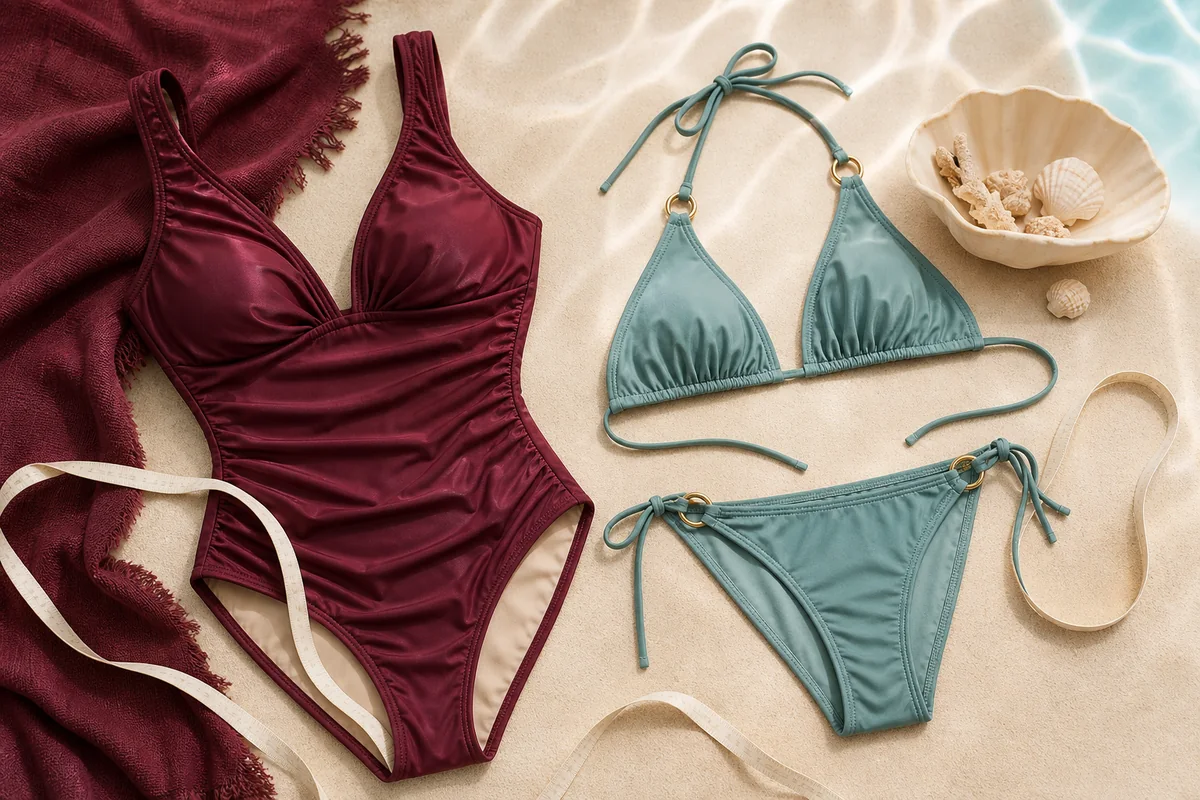
Figuring out how to choose swimsuit size can feel tricky, especially when shopping across different brands, styles, and cuts popular for Thailand’s beaches, pool days, and tropical getaways. There is no universal “perfect” size that works across every label, and small differences in cut, fabric stretch, and design can change how a suit fits your unique body. This practical guide walks you through simple at-home measuring, style-specific fit checks for one-piece swimsuits and bikinis, and common notes to keep in mind so you can pick a size that feels secure and comfortable for all your plans.
Before you start, remember that size labels are just reference points, not judgments of your body. The goal is to find a suit that stays in place when you swim, walk, or sit, without digging, slipping, or feeling overly tight. You can always cross-reference your measurements with our official size guide as a starting point for all For Her Secret swim styles.
First: Gather Your Tools and Take Accurate At-Home Measurements
You don’t need fancy equipment to get measurements that work for size chart cross-referencing. All you need is a soft, flexible measuring tape (the kind used for sewing works best, avoid stiff construction tapes that won’t sit flat against your skin), a mirror to check that the tape is straight, and form-fitting underwear or a thin base layer so you’re not measuring over bulky clothing.
Take these five core measurements, holding the tape snug against your skin but not tight enough to compress tissue. Write each number down in centimeters, as most Thai and international swim brands list size charts in cm for the most consistent reference:
| Measurement | How to take it correctly |
|---|---|
| Bust | Wrap the tape around the fullest part of your bust, keeping it parallel to the floor all the way around your back. Don’t pull the tape so tight that it flattens your breast tissue. |
| Underbust (for bikini tops and supportive one-pieces) | Wrap the tape directly under your bust, where a bra band would sit, keeping it level and snug. This is especially important for underwire or structured bikini tops. |
| Waist | Measure around the narrowest part of your natural waist, usually a couple of centimeters above your belly button, not where low-rise pants sit. Breathe normally and don’t suck in your stomach to get a number that reflects your relaxed, comfortable fit. |
| Hips | Wrap the tape around the fullest part of your hips and rear, usually 20-23cm below your natural waist, keeping the tape level all the way around. |
| Torso (for one-piece swimsuits only) | Start at the center of your shoulder, run the tape down over the fullest part of your bust, between your legs, and back up to the starting point on your shoulder. This is the most overlooked measurement for one-pieces, and it makes a huge difference in avoiding suits that ride up or dig into your shoulders. |
If your measurements fall across two different sizes on a brand’s chart, that is completely normal—very few people match every single measurement line for a single size. We’ll cover how to adjust for that in the sections below.
Key Note: Size Charts Are a Starting Point, Not a Universal Rule
It’s common to notice size differences between Thai local brands, imported labels, and even different styles from the same brand. Never assume that your usual size in a t-shirt, bra, or pair of underwear will automatically match your swimsuit size. For example, a high-cut leg minimal-coverage bikini bottom may fit differently than a high-waisted full-coverage bottom from the same label, even if they are marked the same size.
Stretchy swim fabric also behaves differently than woven clothing material, so a suit that feels slightly snug when dry may loosen a small amount when wet. This does not mean you should size down arbitrarily—if a suit is digging into your skin or restricting your breathing when dry, it will not be comfortable after getting wet.
If you’re browsing options ahead of your next trip, you can filter our full range of styles in the swimwear collection to compare cuts that match your preferred coverage level.
How to Choose the Right Size for Bikinis
Because bikinis are sold as separate tops and bottoms (or as sets with matched sizing), you may need to mix sizes to get the best fit for your body, and that is completely normal. Many brands, including ours, allow you to select separate top and bottom sizes for select bikini styles so you don’t have to settle for a poor fit on one half to get the other half right.
Bikini Top Fit Checks
- Band fit: The band under your bust should sit level all the way around, without riding up your back when you lift your arms overhead. If the band gaps when you stand relaxed, you may need a smaller band size; if it digs deep enough to leave visible marks after a minute of wear, size up.
- Cup fit: Your breast tissue should sit fully within the cup or top fabric without spilling over the top, sides, or bottom of the top. If there is gaping fabric across the top of the cup even when you adjust the straps, you may need a smaller cup or size; if spillage happens even after adjusting, try a size up or a style with more coverage.
- Strap fit: Adjustable straps should be tight enough to stay in place without digging into your shoulders. For tie-strap styles, you can loosen or tighten them to customize the fit, so prioritize matching your band and bust measurement first when selecting a size.
Bikini Bottom Fit Checks
- Waist/hip band: The leg openings and waistband should sit flat against your skin without digging in or rolling down when you bend, squat, or walk. If the waistband rolls immediately when you move, try a size up or a style with a wider, more supportive waistband.
- Coverage: The bottom should provide the amount of coverage you prefer without riding up excessively when you move. It is normal for some cuts to sit higher on the leg, but if you are constantly adjusting the fabric to stay in place, the size or style may not be the best match for you.
- Leg opening: If the leg cuts dig into the top of your thighs or create bulging over the fabric, size up; if the gaps are loose enough that the fabric shifts and exposes more than you intend when you move, you may prefer a smaller size or a different cut.
If your bust and hip measurements fall into two different size categories, opt to match the size for the part of the bikini that has the least adjustability first. For example, if a bikini top has no adjustable bands or tie closures, prioritize your bust measurement for the top size, and select your bottom size based on your hip measurement, even if they are not the same labeled size.
How to Choose the Right Size for One-Piece Swimsuits
One-piece swimsuits rely on torso length as much as bust, waist, and hip measurements, which is why many people find one-pieces trickier to size than bikinis. If you have a longer torso, you may find that a size that fits your bust and hips pulls uncomfortably at the crotch or shoulder straps; if you have a shorter torso, you may notice extra fabric bunching around the midsection even when the bust and hip fit feels right.
Use this quick fit checklist when trying on a one-piece (try it on over thin underwear to keep the suit clean and returnable if needed):
- First, pull the suit up fully so the crotch sits comfortably against your body, then adjust the shoulder straps to their loosest setting first. You should be able to fit one finger between the strap and your shoulder without the strap slipping off.
- Bend forward, reach overhead, and squat a few times. The suit should stay in place: the bust line should not pull down so far that it exposes more than you are comfortable with, and the crotch should not ride up to an uncomfortable degree.
- Check the midsection: if the fabric pulls tight across your back or stomach so much that it restricts your breathing, or pulls at the seams when you move, size up. Bunching or extra loose fabric around the midsection may mean you need a smaller size, or a style cut for shorter torsos.
- Check the leg openings, just as you would for bikini bottoms: they should sit flat against your skin without digging in or gaping.
For one-pieces, if your measurements fall across two sizes, prioritize the torso and bust measurements first for styles with structured bust support. If a suit has adjustable straps and stretchy fabric, you can often get a good fit if your waist or hip measurement is one size off, as the stretch fabric will accommodate small differences.
Quick Tips for Swimsuit Shopping in Thailand
When shopping for swimwear for beach trips, pool days, or resort stays in Thailand’s warm climate, keep these small tips in mind to avoid fit frustration:
- If you plan to wear your swimsuit for active swimming, surfing, or other water activities, opt for a slightly more snug fit (but still not restrictive) than you would for a suit you only wear for lounging, as wet fabric will stretch a small amount with movement.
- Always check the specific size chart on the product page for the suit you are looking at, rather than relying on a generic size from past purchases. Even within our own store, different cuts may have slightly different size alignments, so the product-specific chart is always the most accurate reference.
- If you love a style but aren’t sure between two sizes, you can note our return and exchange policy on the customer service page, and test the fit at home before removing tags or hygiene liners.
- Avoid measuring yourself right after a large meal or at the end of a long day of standing, as temporary bloating or swelling can lead to measurements that don’t reflect your most comfortable everyday fit.
Once you find a size and style that works well for you, you can keep it in great shape for multiple trips by following simple care tips, like rinsing suits in cool water after use and avoiding harsh detergents—you can find full steps in our lingerie and swimwear care guide. You don’t have to chase a single “ideal” size to find a swimsuit that feels great; the best fit is the one that lets you focus on enjoying your time, rather than adjusting your suit every few minutes.
 How to Pick the Best Breathable Underwear for Hot Weather in Thailand
 The Best Sleepwear for Hot Nights: Breathable Picks for Thailand’s Warm, Humid Climate
 The Best Bras for Hot Humid Weather: Comfortable Picks for Thailand’s Climate